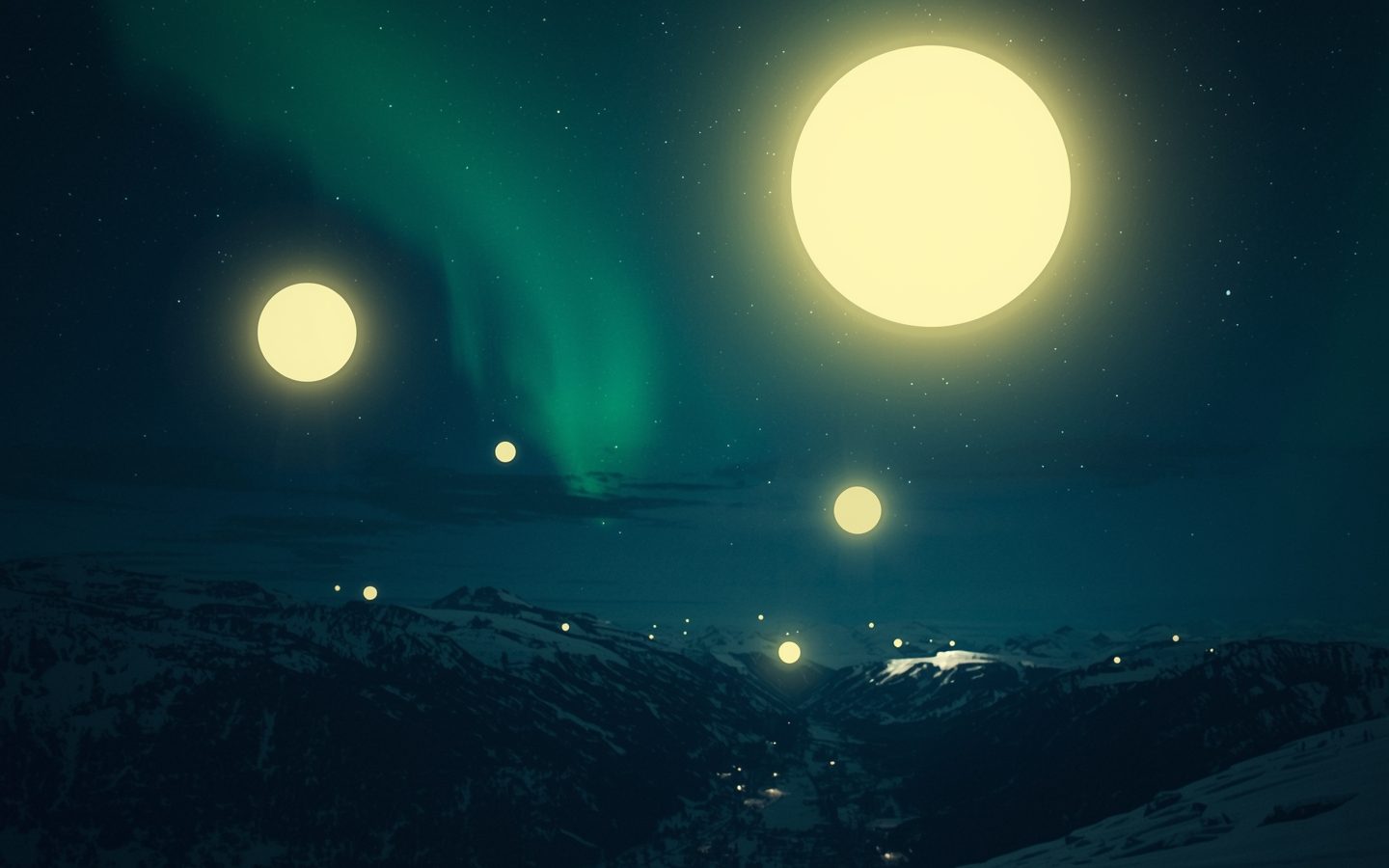

Deep in the remote Hessdalen Valley of central Norway, something extraordinary has been happening since at least 1981. Bright, pulsating lights appear without warning over the snow-covered hills — hovering, accelerating, changing color, splitting into multiple objects, and then vanishing as suddenly as they arrived. Unlike most UFO phenomena that exist only in eyewitness testimony, the Hessdalen lights have been photographed thousands of times, tracked on radar, and subjected to years of rigorous scientific investigation. They remain, to this day, completely unexplained.
What Are the Hessdalen Lights? First Documented Sightings
The Hessdalen valley is a sparsely populated agricultural region about 120 kilometers south of Trondheim. In 1981, residents began reporting unusual lights behaving in ways that defied conventional explanation. The lights appeared both day and night, sometimes stationary for up to an hour, sometimes accelerating to estimated speeds of 30,000 kilometers per hour. Witnesses described them as white, yellow, or red, spherical or elongated in shape, and occasionally associated with a physical sensation of heat or electromagnetic interference in nearby electronics.
At the peak of activity between 1981 and 1985, sightings were reported up to 20 times per week. Local residents were understandably alarmed. A group of Norwegian scientists, initially skeptical, launched what would become the most sustained scientific investigation of a UAP phenomenon in history. The Hessdalen Project, founded in 1983, established a permanent automated monitoring station in the valley that operates to this day, collecting data continuously and alerting researchers when phenomena are detected.
Project Hessdalen: Science Takes the Phenomenon Seriously
The scientific response to Hessdalen was unprecedented in UFO research. In 1984, the first organized field expedition — “Project Hessdalen” — deployed 40 scientists and students equipped with radar, seismographs, magnetometers, spectrum analyzers, and cameras over a five-week period. They documented 188 sightings and successfully photographed the lights multiple times. The data they collected was genuinely anomalous: the lights showed radar returns inconsistent with known aircraft, emitted in multiple electromagnetic spectra simultaneously, and occasionally appeared to respond to laser signals directed at them — though researchers cautioned against over-interpreting this observation.
The Italian CNR (National Research Council) later joined the investigation, and NTNU (the Norwegian University of Science and Technology) has maintained ongoing research partnerships. The AMS (Automatic Measurement Station) installed in the valley in 1998 uses cameras, magnetometers, radar, and a spectrum analyzer running 24 hours a day. When it detects an anomalous light, it triggers recording across all instruments simultaneously, capturing comprehensive multi-spectral data that no single observer could collect.
Scientific Theories: What Could the Hessdalen Lights Be?
Decades of scientific data have produced several competing hypotheses, none of which fully accounts for all observed characteristics. The most widely discussed natural explanation involves plasma or ball lightning — a poorly understood atmospheric electrical phenomenon that can produce glowing, self-contained balls of ionized gas. The Hessdalen valley sits atop rich mineral deposits including sulfur, copper, and zinc, and researchers have proposed that the interaction of underground chemical reactions with the atmospheric electrical environment could generate long-lasting plasma phenomena unlike anything seen elsewhere.
Italian scientist Massimo Teodorani, one of the most prolific researchers of the phenomenon, proposed a model in which ionized dust clouds are created by chemical reactions in the ground and then levitated by electromagnetic forces. He documented cases in which the lights emitted in the radar, infrared, visible, and ultraviolet spectra simultaneously — a combination that no single known natural or man-made source produces. Physicist Bjørn Gitle Hauge, who has analyzed Hessdalen data extensively, found that the lights sometimes have a structured interior, with a hard outer shell and a rapidly fluctuating inner core — behavior more consistent with an organized energy structure than a random plasma phenomenon.
The Extraterrestrial Hypothesis and Why Some Researchers Take It Seriously
While mainstream researchers are careful to avoid the extraterrestrial interpretation, some aspects of the Hessdalen lights have prompted serious researchers to keep the possibility open. The lights occasionally appear to demonstrate purposeful behavior — changing direction in response to external stimuli, maintaining formation with other lights, and exhibiting what some observers describe as “intelligent” responses to human activity in the valley. On at least three documented occasions, a light was observed to split into two separate lights that then moved independently before reuniting.
The extraordinary longevity of the phenomenon — more than 40 years of documented sightings — and its resistance to any complete natural explanation has led a minority of researchers to propose that the lights represent some form of non-human intelligence operating in the valley. The fact that they have been observed more frequently since human settlement of the area, and that they appear to monitor human activity from a distance, adds a layer of strangeness that pure plasma models struggle to explain. Whatever they are, the Hessdalen lights remain one of the best-documented and least-explained mysteries in the modern world.
Hessdalen Today: Ongoing Monitoring and New Data
Sighting frequency has declined significantly since the early 1980s peak, but the lights continue to appear. Modern monitoring equipment captures several documented events per year. The Hessdalen Project website maintains a public database of sightings and measurement data, making it one of the most transparent scientific UAP research projects in existence. University students from across Europe travel to the valley for research stays, and international scientific collaborations continue to analyze the accumulated data.
In recent years, drone technology has been deployed in the valley in attempts to get closer to the lights during active periods. The results have been mixed — some close-up footage appears to show the lights reacting to the drone’s approach by moving away or extinguishing. Whether this represents a natural response of a plasma phenomenon to electromagnetic interference from the drone, or something more deliberate, remains an open question. The Hessdalen lights continue to challenge science’s ability to explain the unexplained — and in doing so, they remain one of the most compelling locations on earth for anyone seeking evidence that our understanding of physical reality is still very incomplete.
Sources and Further Reading
- Teodorani, M. (2004). “A Long-Term Scientific Survey of the Hessdalen Phenomenon.” Journal of Scientific Exploration, 18(2), 217–251.
- Hauge, B.G. et al. (2010). “Optical spectrum analysis of the Hessdalen phenomenon.” Acta Astronautica, 67(7–8), 1081–1090.
- Project Hessdalen official website: hessdalen.org
- NTNU Hessdalen AMS data archive
- Strand, E.P. (1984). Project Hessdalen 1984: Final Technical Report. Østfold College, Norway.
Discover more from Infinity Explorers
Subscribe to get the latest posts sent to your email.