
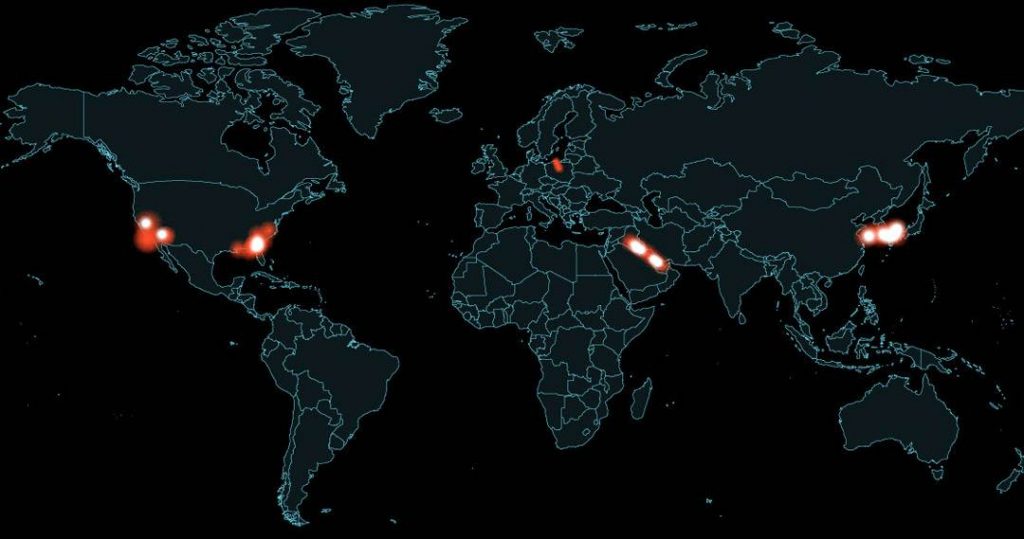
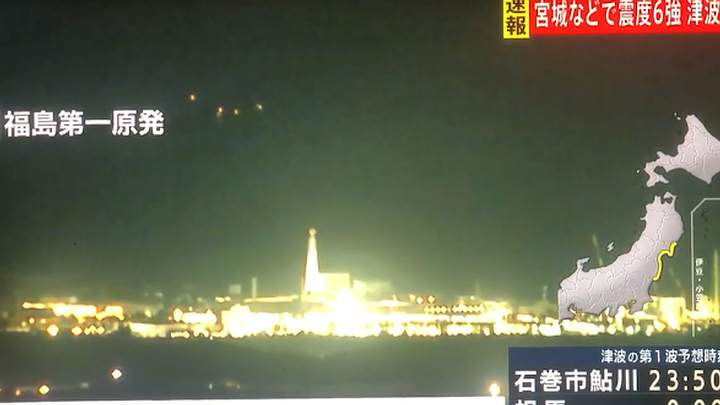
When the Pentagon launched its official UAP reporting website through the All-domain Anomaly Resolution Office (AARO), researchers and enthusiasts expected a dry bureaucratic portal. What the data revealed was striking: Japan consistently appears as one of the most UAP-active regions on the planet, with military personnel and civilians alike filing reports at rates that place the island nation alongside traditional hotspots like the American Southwest and the United Kingdom. The disclosure has prompted both excitement in the UFO research community and serious questions about what is operating in Japanese airspace — and why.
What the AARO Data Shows About Japan
AARO’s publicly accessible reporting portal allows users to explore UAP incident data mapped geographically. Japan emerges as a concentration point in the Asia-Pacific region, with sightings clustered particularly around military installations, naval facilities, and along coastlines facing the Pacific Ocean. The reports span all the major UAP categories described in the 2021 Office of the Director of National Intelligence preliminary assessment: airborne clutter, natural atmospheric phenomena, classified programs, adversary systems, and the catch-all category of “other” that covers genuinely anomalous incidents. The volume of Japanese entries in the “other” category — incidents that cannot be explained by any conventional category — is disproportionately high relative to report volume, suggesting that what is being observed in Japanese airspace is not simply misidentified conventional phenomena.
Japan’s Military and the UAP Problem
Japan’s Self-Defense Forces have dealt with UAP encounters for decades, though the country’s strong post-war prohibitions on military activity created institutional disincentives to publicize such incidents. In 2020, Japan’s Defense Ministry formally instructed SDF pilots to document and report UAP encounters — a significant policy shift that mirrors the US Navy’s 2019 reporting guidelines. Japanese military officials have publicly acknowledged that some encounters involve objects demonstrating flight characteristics inconsistent with known aircraft, including hypersonic speeds, extreme altitude changes, and apparent underwater operation. The Maritime Self-Defense Force, which patrols the extensive ocean territory surrounding the archipelago, has filed a particularly high proportion of the reports, aligning with broader global evidence that UAP have a significant relationship with large bodies of water.
Historical Context: Japan’s UFO Legacy
Japan’s prominence in modern UAP data is not entirely surprising given the country’s long history of documented UFO encounters. Japanese fishermen and coastal communities have described luminous objects emerging from and descending into the sea for centuries. The post-war period brought a surge of reports corresponding with the global wave of UFO sightings in the late 1940s and 1950s. Japan Airlines Flight 1628, a November 1986 encounter in which a JAL Boeing 747 was shadowed by massive unidentified craft over Alaska for nearly 50 minutes, remains one of the most extensively documented commercial aviation UFO encounters in history. The crew’s testimony, corroborated by FAA radar data, established Japan as a country with serious UAP encounters at the highest levels of credentialed observation.
Geographic and Strategic Factors
Japan’s position at the intersection of three major tectonic plates, surrounded by the deepest ocean trenches on Earth, makes it geographically distinctive in ways that UFO researchers find significant. The Mariana Trench, the planet’s deepest known point, lies directly east of the Philippine Sea and relatively close to Japan’s southern islands. Multiple UAP researchers and some military analysts have noted a global correlation between deep ocean trenches and UAP activity, suggesting either that the objects operate from underwater bases or that geological factors — intense electromagnetic activity associated with plate boundaries, geothermal energy, deep water pressure differentials — play a role in UAP behavior. Japan sits at the convergence of all these factors, making its elevated UAP activity consistent with a broader pattern observed globally.
The Disclosure Significance
The AARO data’s highlighting of Japan as a UAP hotspot carries significance beyond the individual incidents it represents. It establishes, through an official US government platform, that anomalous aerial phenomena are not uniquely an American concern but a genuinely global phenomenon — and that allied nations are encountering and grappling with the same unexplained objects. Japan and the United States share extensive military cooperation through treaty arrangements, joint basing, and intelligence sharing. The overlap between Japanese UAP reports and US military installations in Japan raises questions about whether some incidents involve observations of American classified programs, adversarial reconnaissance technology, or something that neither the US nor Japan can readily explain. As AARO continues to build its global dataset and Japan’s Defense Ministry increases its reporting requirements, the picture emerging from Japanese airspace is one that demands serious investigation far beyond the casual interest of UFO enthusiasts.
Discover more from Infinity Explorers
Subscribe to get the latest posts sent to your email.