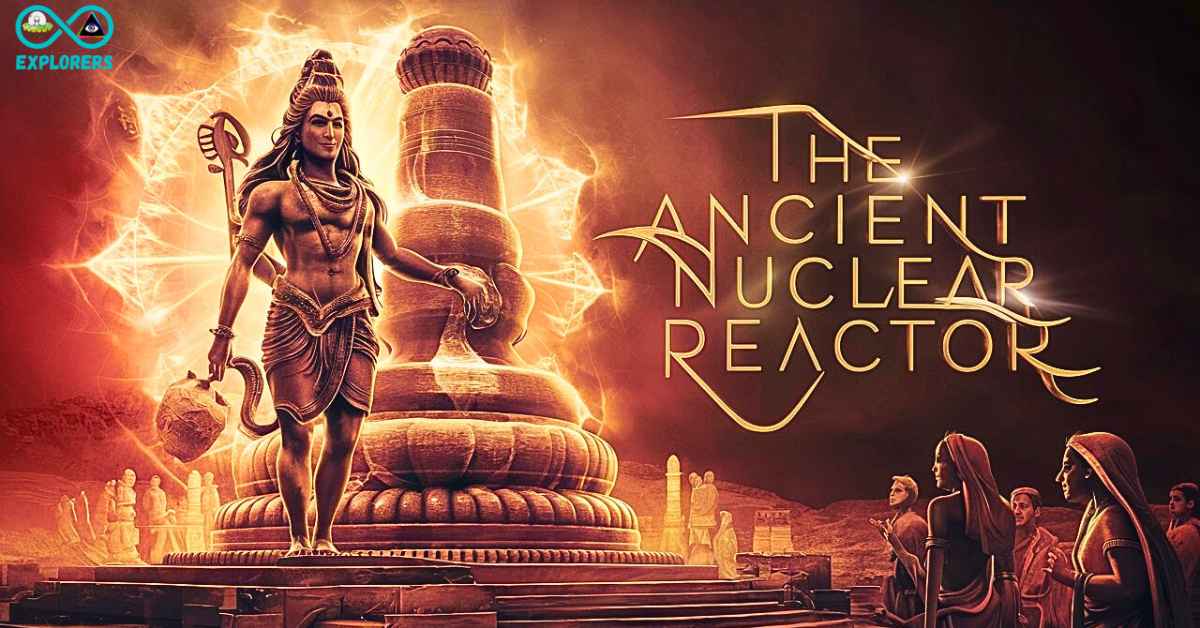

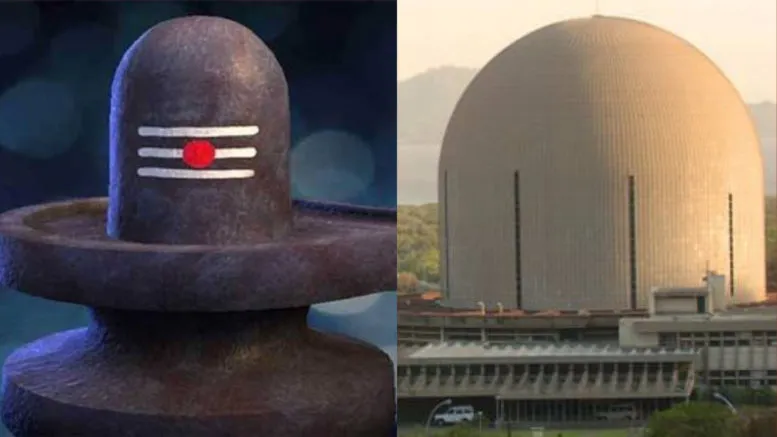


Among the most provocative theories in ancient astronaut research is the claim that Shiva Lingams — the sacred stone pillars venerated across Hindu temples — were not merely religious symbols but functional nuclear reactors or radiation-processing devices built by an advanced civilization. The theory draws on ancient Sanskrit texts, architectural analysis of temple structures, and parallels with modern nuclear engineering to argue that the ancient world possessed energy technology far beyond what mainstream archaeology acknowledges.
What Is a Shiva Lingam?
In Hindu tradition, the Shiva Lingam is a cylindrical stone pillar, typically mounted in a yoni base that allows liquid to drain away, representing the cosmic union of masculine and feminine principles and the generative power of Lord Shiva. Millions of these structures exist across India and Southeast Asia, ranging from small household items to massive temple centerpieces. The most sacred, the Jyotirlinga shrines, are believed to be sites where Shiva manifested as a column of infinite light. Traditional interpretation frames the Lingam as a purely spiritual object. Ancient astronaut theorists argue the engineering details tell a more complex story.
The Nuclear Reactor Hypothesis
Researcher and author V.K. Maheshwari was among the first to formally propose that Shiva Lingams functioned as nuclear reactors in the ancient world. His analysis focused on several key structural details: the cylindrical form consistent with a reactor core, the yoni drainage channel engineered to remove liquid coolant, the use of specific stone types with natural radiation-absorbing properties, and the ritual prohibition against touching certain Lingams with bare hands — a precaution that makes sense in the context of radiation management but seems excessive for a mere stone symbol. The ancient texts themselves, particularly the Shiva Purana, describe the Lingam as a source of extraordinary heat and light, with legends of it burning so intensely that even the gods could not find its beginning or end.
Sanskrit Texts and Ancient Energy Knowledge
The Vedic literature contains numerous passages that ancient astronaut researchers interpret as technical descriptions rather than mythology. The Mahabharata references weapons of mass destruction — the Brahmastra and Brahmanda-astra — described in terms consistent with nuclear detonations: blinding flashes, columns of smoke, widespread destruction of all living things, and lands rendered uninhabitable for generations. The Ramayana describes flying vehicles, Vimanas, powered by mercury vortex engines. The Arthashastra, a political treatise compiled around 300 BCE, contains references to materials and processes that some researchers identify as alchemical and early nuclear chemistry. Taken together, these texts suggest a civilization with theoretical if not practical understanding of atomic energy thousands of years before the Manhattan Project.
Archaeological Evidence for Ancient Radiation Exposure
The ancient city of Mohenjo-daro, excavated in the 1920s in what is now Pakistan, provided what some researchers consider physical evidence for ancient nuclear events. Archaeologist Francis Taylor noted that skeletons found at the site showed radiation levels 50 times higher than normal. Many bodies were found in the streets, apparently felled mid-stride with no signs of conventional violence. Vitrified stone — material fused into glass by extreme heat — was found across the site. The city appeared to have been abandoned suddenly after a catastrophic event. Ancient astronaut researchers link Mohenjo-daro’s destruction to the Mahabharata accounts of divine weapons, suggesting a nuclear exchange 4,000 years ago. Similar vitrified ruins have been found in Scotland, France, and the Middle East, all predating any conventional explanation for such extreme heat.
Temple Architecture as Radiation Shielding
Several researchers have analyzed Hindu temple architecture through the lens of nuclear containment engineering and found striking parallels. The massive stone walls of ancient temples, often several meters thick, would provide effective radiation shielding. The specific placement of the inner sanctum — the garbhagriha or womb chamber — deep within the structure and accessible only through narrow corridors with multiple stone barriers mirrors the layered containment design of modern nuclear facilities. Some temples use copper and gold plating on specific surfaces, metals with known radiation properties. The ritual requirement that only priests enter the inner sanctum, combined with regular ablutions and specific purification protocols, could reflect genuine radiation safety practices encoded into religious ceremony over millennia.
Modern Research and the Debate
Mainstream archaeology firmly rejects the nuclear reactor interpretation, arguing that the Lingam’s form derives from Paleolithic fertility symbolism and that the engineering parallels are coincidental. However, a small but persistent community of researchers — including nuclear engineers who have examined the structural claims — argue the theory deserves serious investigation rather than reflexive dismissal. India’s remarkable ancient mathematical and astronomical knowledge, including the precise calculation of planetary orbits thousands of years ago, demonstrates that Vedic civilization possessed scientific sophistication that continues to surprise modern scholars. Whether or not Shiva Lingams were nuclear reactors, the question of how much advanced knowledge the ancient world actually possessed remains one of the most compelling unsolved puzzles in human history.
Discover more from Infinity Explorers
Subscribe to get the latest posts sent to your email.