
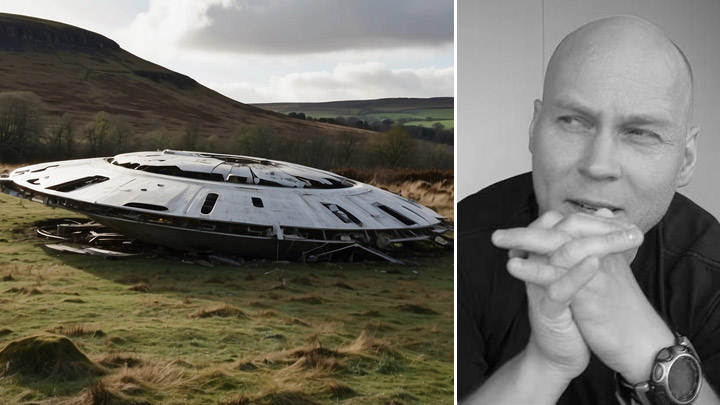
In the annals of Britain’s most closely guarded military secrets, few claims are as explosive — or as persistently difficult to dismiss — as the alleged recovery of a non-human craft by British Special Forces in the moorlands of Northern England. The story, pieced together over decades from whistleblower testimony, Freedom of Information requests, and investigative journalism, describes a covert operation conducted under strict blackout conditions: no official acknowledgment, no public record, and no explanation for the corroborating details that independent researchers have managed to surface. Whether it represents the most significant military secret in British history or an elaborate myth built on fragments of truth, it refuses to disappear.
The Initial Reports and Whistleblower Accounts
The first serious public accounts of a British Special Forces alien craft recovery emerged through a combination of anonymous military sources and civilian witnesses who claimed to have observed unusual activity in remote moorland areas of Northern England during the late 1980s and early 1990s. These witnesses described low-flying helicopters, road closures attributed to unspecified military exercises, and the presence of specialized personnel in unmarked vehicles who appeared to be conducting systematic searches across a defined geographic area.
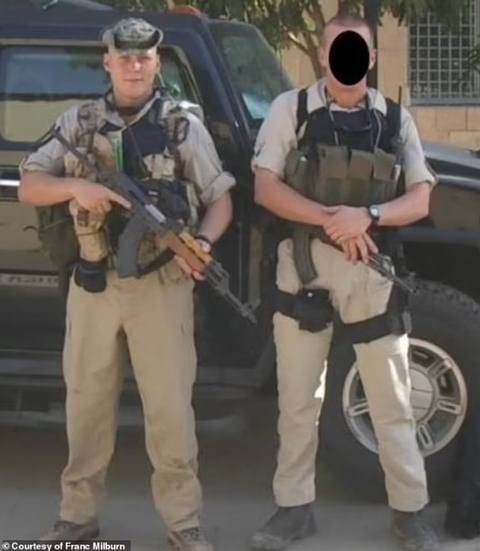
The whistleblower accounts that followed over subsequent years shared several consistent details: that British Special Forces were deployed as a containment and recovery unit rather than a combat force, that the operation involved personnel from both military intelligence and what sources described as a classified scientific assessment team, and that recovered material was transported to a secure facility — with different witnesses naming different locations, though several accounts converge on a site in the English Midlands associated with defense research. Individually, each account is easy to dismiss. The convergence of independent details across sources separated by years and geography is harder to explain away.
The Craft: Described Characteristics
Accounts of the recovered object itself vary in their specifics but share a structural coherence that investigators have found notable. Multiple sources describe an object roughly oval or disc-shaped, significantly smaller than popular culture depictions of “flying saucers” — estimates range from approximately 20 to 35 feet in diameter. The craft was reported to be metallic in appearance but of unusual texture, with no visible seams, rivets, or mechanical joints on the exterior surface. Witnesses described the material as reflecting light in a manner inconsistent with known alloys — not quite mirror-like, but with an iridescent quality that shifted depending on the angle of observation.
One detail that recurs across multiple independent accounts is the absence of an obvious propulsion system. No engine nacelles, exhaust ports, or thrust mechanisms were visible on the exterior. Personnel who reportedly had brief access to the interior described a smooth, curved inner surface with embedded elements that resembled controls or instrumentation but operated on principles that no one present could immediately interpret. The craft was reportedly undamaged in structural terms — it had not crashed in the conventional sense — but showed signs of what sources described as a controlled emergency landing, with scorching on one section of the undercarriage consistent with intense localized heat.
The Operation: How It Was Conducted
According to reconstructed accounts, the operation to secure and extract the craft followed a protocol that suggested it was not improvised — that either standing procedures existed for exactly this kind of event, or that rapid coordination with a higher authority produced an organized response within hours of the object’s location being confirmed. A cordon was established across a wide perimeter, with a cover story — reportedly involving a gas leak or unexploded ordnance from World War II — used to justify road closures and the exclusion of civilians from the area.
Specialist personnel equipped with what witnesses described as unusual protective clothing were among the first to approach the object. The extraction itself reportedly took place over two nights, with heavy-lift helicopter operations conducted under strict communications blackout. Local residents reported unusual helicopter activity that was officially attributed to training exercises. The operation’s timeline, as reconstructed, suggests a level of coordination that would require authorization at a senior government or military intelligence level — not a response that could be organized at regional command without explicit direction from above.
The Cover Story and Official Silence
What distinguishes the British Special Forces recovery claim from many similar stories is the documented existence of an official information blackout that researchers have been able to partially verify. Freedom of Information requests submitted to the Ministry of Defence regarding specific dates and grid references associated with the reported incident have returned responses acknowledging that records exist but cannot be disclosed on grounds of national security — a response that neither confirms nor denies the substance of the claim, but confirms that something worth classifying occurred in the area and period in question.
The Ministry of Defence closed its official UFO desk in 2009, releasing a tranche of historical files. Researchers who examined those files noted specific gaps — date ranges where incident reports and internal correspondence would be expected based on surrounding documentation but are absent. Whether those gaps represent deliberate redaction, routine destruction under records management policy, or simply incomplete digitization remains unclear. What is clear is that the absence is structured rather than random, which several researchers have argued is itself suggestive.
Connections to Broader British UFO Intelligence History
The Northern England recovery claim does not exist in isolation. It sits within a broader documented history of British military and intelligence engagement with unexplained aerial phenomena that is better established than many people realize. The RAF ran its own internal UFO investigation unit for decades. The Defence Intelligence Staff produced classified assessments of UFO phenomena as late as the early 2000s — assessments that, when eventually released, acknowledged the reality of unexplained objects operating in British airspace with performance characteristics beyond known technology.
Former intelligence officials including Nick Pope, who ran the MoD’s UFO project from 1991 to 1994, have publicly stated that the British government took the UFO phenomenon seriously at the classified level even while publicly dismissing it. Pope himself has stopped short of confirming the specific Northern England recovery account, but has noted that recovery protocols were a subject of internal discussion during his tenure and that the existence of classified programs related to the topic “should not surprise anyone familiar with how government actually works.” That carefully worded statement, from someone with direct access to relevant files, has been widely noted by researchers.
Skeptical Perspectives and Counterarguments
Serious skeptical analysis of the British Special Forces recovery claim raises valid objections that any fair treatment of the subject must acknowledge. The lack of physical evidence — no recovered material, no credible photographs, no documentation that has survived outside of anonymous testimony — means the claim rests entirely on witness accounts, which are inherently fallible. Memory distorts, stories grow in the telling, and the cultural weight of UFO mythology creates strong pressure on any account to conform to recognizable narrative patterns.
Some researchers have proposed that the operation witnesses described may have been a real classified military exercise involving experimental aircraft — advanced prototype drones or stealth platforms tested in remote areas under cover stories are a documented reality in both American and British defense programs. The described characteristics could, they argue, fit an advanced but conventional craft rather than a non-human one. This is a legitimate alternative interpretation, though proponents of the recovery account note that the described characteristics — particularly the absence of propulsion systems and the material properties — do not fit any known British or American experimental aircraft from the period in question.
Why This Case Continues to Matter
In the post-2017 environment, where the United States government has officially acknowledged the existence of UAP programs and active retrieval efforts, the British Special Forces recovery account has taken on new relevance. What was once dismissed as fringe speculation now operates in a landscape where government retrieval programs are openly discussed in Congressional testimony and where former defense officials from multiple nations have made extraordinary claims about recovered non-human material.
The British government has maintained public silence on this specific account, but the broader geopolitical shift in how UAP is discussed has emboldened researchers and former officials to revisit claims that were previously treated as untouchable. Several British journalists with serious investigative track records have reported that sources within the intelligence community are more willing to discuss these matters now than at any previous point — not to confirm specific incidents, but to indicate that the subject is more substantive than official silence has implied. For the Northern England recovery claim, that shift means the question is no longer whether to take it seriously, but how to properly investigate it. That work continues.
Discover more from Infinity Explorers
Subscribe to get the latest posts sent to your email.