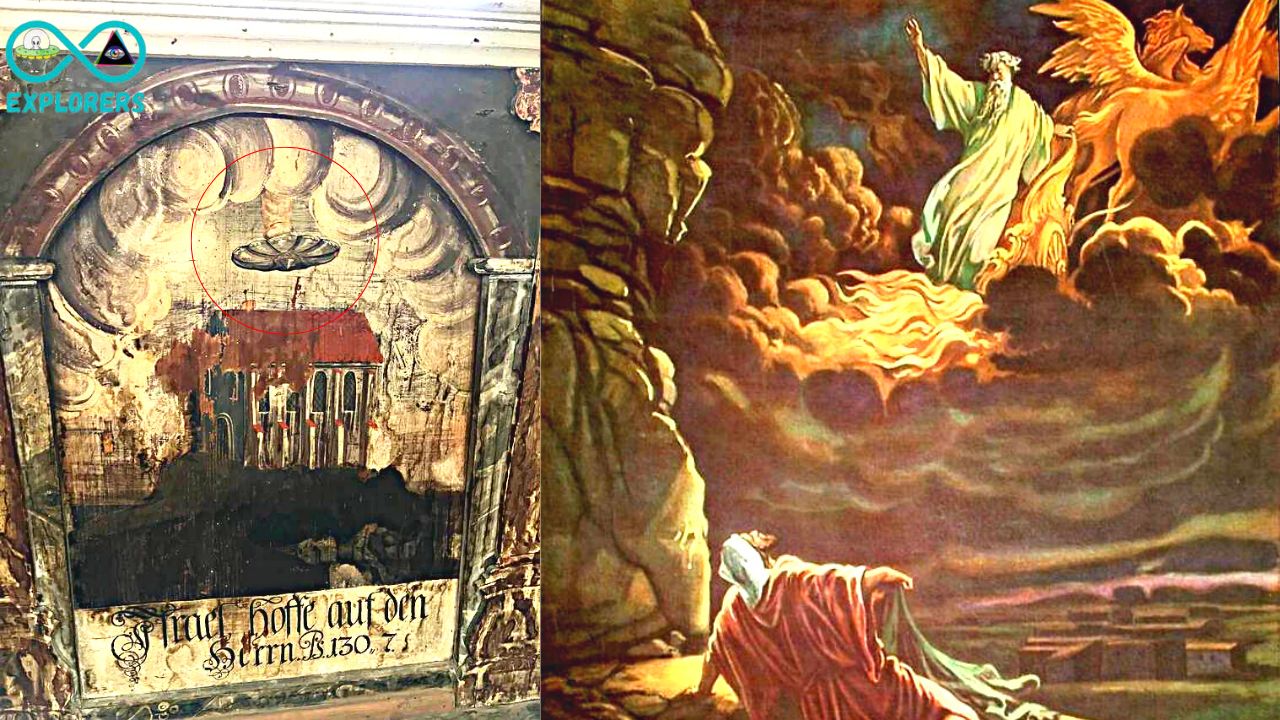

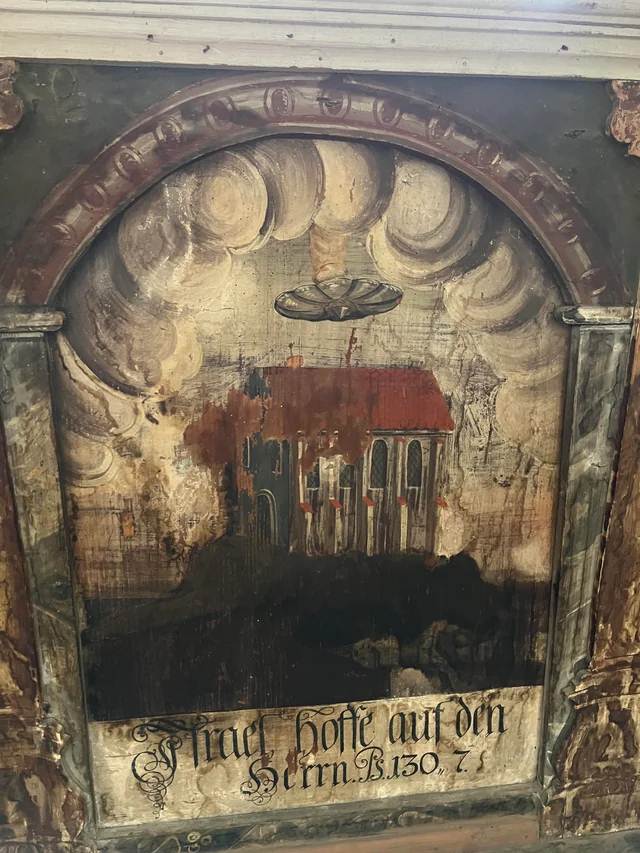
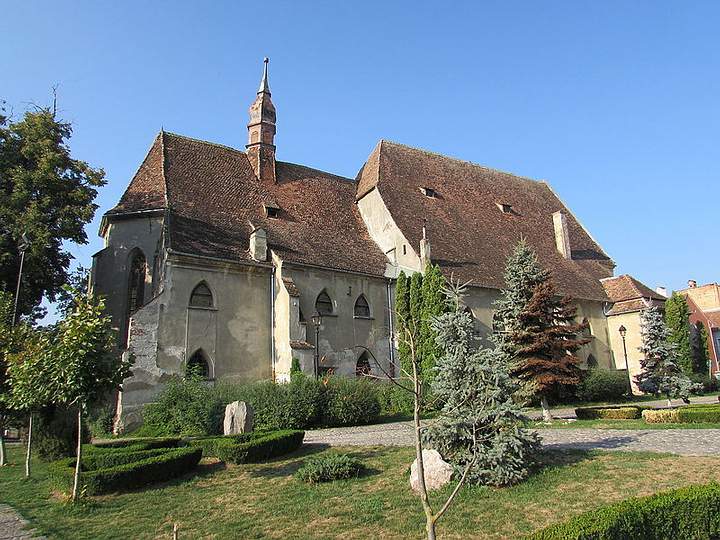
Credit: Catalina Borta.
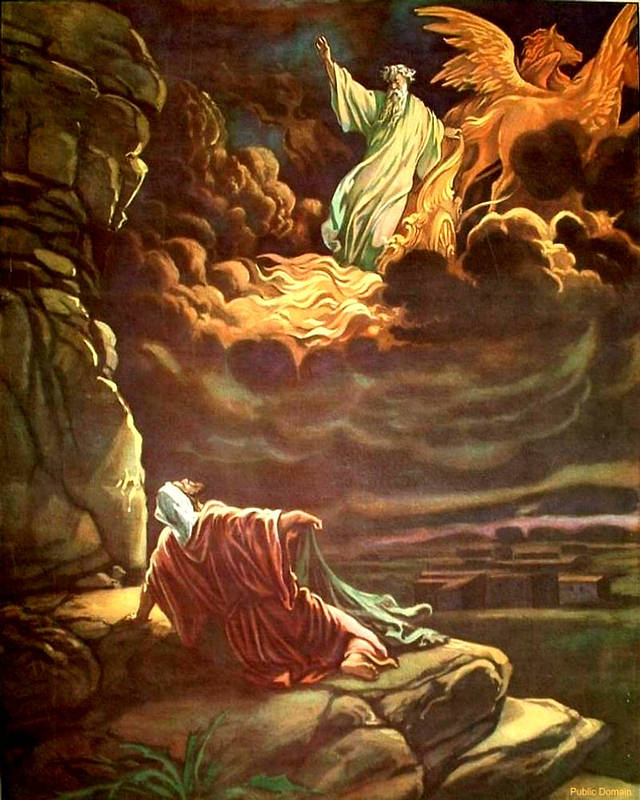
By Adolf Hult, 1919.
In the ongoing search for historical evidence of extraterrestrial contact, few discoveries generate more excitement than alleged depictions of unidentified flying objects in ancient and medieval art. A painting discovered in an old Dominican monastery church adds a striking entry to this catalogue: an image that, to modern eyes, appears to show a disc-shaped aerial object hovering in the sky above a religious scene. The discovery invites serious questions about what medieval artists were depicting — divine symbolism encoded in unfamiliar visual language, or a genuine attempt to record something observed in the sky above their world.
The Discovery and Its Setting
Dominican monasteries and their associated churches served as centers of scholarship, art production, and theological debate throughout medieval Europe and Latin America. Their walls accumulated centuries of painted imagery commissioned to instruct, inspire, and commemorate. The discovery of a painting within such an institution depicting what appears to be a structured aerial object carries particular significance because the Dominican order was historically associated with rigorous intellectual inquiry — it produced Thomas Aquinas and oversaw the Inquisition with an emphasis on doctrinal precision. Art produced within Dominican spaces was carefully controlled and theologically deliberate. An image appearing to show a UFO in such a context is either a bold allegorical choice or a depiction of something the artist considered real and worth recording.
Analyzing the Image: Symbolism or Observation?
Art historians approach alleged UFO paintings with a standard interpretive framework: most disc-shaped or luminous objects in medieval religious art represent divine presence — the glory cloud of God, the vehicle of the Holy Spirit, or celestial phenomena associated with miraculous events. The halos, divine light rays, and cloud formations in medieval Christian art frequently take forms that, divorced from their theological context, could superficially resemble modern UFO descriptions. This conventional interpretation covers many cases. However, researchers studying specific images argue that some paintings go beyond conventional divine symbolism in their detail — depicting structured objects with apparent surface features, occupants, or mechanical characteristics that exceed what theological convention required. The monastery painting falls into this more ambiguous category where the standard art historical explanation is possible but not entirely satisfying.
Other Medieval UFO Paintings and Their Context
The Dominican monastery painting is far from the only example of its type. The 1486 painting “The Madonna with Saint Giovannino,” attributed to Sebastiano Mainardi, clearly shows a disc-shaped object in the sky with a man shielding his eyes looking up at it — an image that has been studied extensively by UFO researchers as it appears to show both an aerial craft and a human witness reacting to it. The 1710 painting “The Baptism of Christ” by Aert de Gelder shows a disc emitting light beams directly onto the scene below. The 14th century fresco at the Visoki Decani monastery in Kosovo depicts what appears to be two people in aerial craft flanking a religious scene. These images, across different centuries and cultural contexts, share visual elements that ancient astronaut researchers argue cannot all be dismissed as pure religious symbolism.
What Ancient Astronaut Researchers Argue
The ancient astronaut interpretation of religious art proposes that medieval and ancient artists were sometimes depicting genuine aerial phenomena they had witnessed or heard described — phenomena that their theological framework led them to interpret as divine manifestations. In this reading, the “cloud of glory” of the Old Testament, the “wheel within a wheel” of Ezekiel, and the luminous objects depicted in centuries of religious art represent actual encounters with technology that ancient observers lacked the conceptual vocabulary to describe accurately. Artists did not paint space ships because they had no concept of space ships — they painted the divine chariot, the glory of God, the celestial vehicle, using the symbolic language available to them. The Dominican monastery painting, in this framework, records an actual sighting translated into religious imagery.
The Broader Question of Ancient Evidence
Whether or not any specific painting constitutes genuine evidence of historical UAP encounters, the accumulation of alleged UFO depictions across cultures and centuries raises a question that deserves serious engagement rather than reflexive dismissal. Humans throughout history have observed the same sky that we observe today. They reported extraordinary things in that sky and encoded those reports in the most durable medium available to them — stone carvings, frescoes, and painted panels that have survived for centuries precisely because they were treated as sacred. The Dominican monastery painting adds one more entry to a global catalogue of pre-modern imagery that shares structural similarities with modern UAP descriptions. Whatever explains the whole body of evidence — theological symbolism, misidentified natural phenomena, cultural transmission, or genuine historical encounters — the question is worth asking with rigor and an open mind.
Discover more from Infinity Explorers
Subscribe to get the latest posts sent to your email.