


The dominant framework for understanding UFOs — as craft piloted or controlled by extraterrestrial intelligences from other star systems — is so deeply embedded in popular culture that alternative hypotheses rarely receive serious attention. Yet a small but persistent community of researchers has advanced a genuinely radical alternative that cannot be dismissed on purely logical grounds: that some, or even most, of what we observe as UFOs are not machines at all, but living biological entities — creatures that have evolved to inhabit the upper atmosphere, the mesosphere, or even the near-vacuum of low Earth orbit, and that have simply been misidentified as technological objects because our conceptual frameworks are not equipped to recognize biology operating at altitude and at scale.
The Origins of the Biological Entity Hypothesis
The idea of aerial life forms has a longer intellectual history than most people realize. In the 19th century, Charles Fort — the iconoclastic researcher whose work gave rise to the term “Fortean phenomena” — documented numerous accounts of unusual aerial objects and proposed that some might be living creatures native to the upper atmosphere. Fort’s work was largely dismissed by the scientific establishment of his era, but it established a conceptual category that subsequent researchers returned to.
The hypothesis received its most systematic modern treatment from researcher Trevor James Constable, who in the 1950s began photographing what he argued were large, amorphous biological entities in the infrared spectrum — forms invisible to the naked eye but detectable on infrared film. Constable called these entities “critters” and developed an elaborate theory of atmospheric biology to account for them. His work attracted ridicule from mainstream science and from the UFO research community equally, but the infrared photographic anomalies he documented have never been fully explained away, and researchers who have replicated aspects of his methodology have in some cases obtained similar results.
What Atmospheric Life Forms Might Look Like
Applying conventional evolutionary biology to the upper atmosphere produces a set of predictions about what life forms adapted to that environment would need to be. They would require mechanisms for managing extreme temperature variation — from minus 60 degrees Celsius at the tropopause to near-absolute zero at higher altitudes. They would need to generate and store energy in environments with no photosynthetically useful light intensity. They would require structural adaptations for extremely low-pressure environments that would cause any Earth-surface biology to rupture. And they would need to be capable of rapid altitude adjustment to exploit the temperature and pressure gradients of the atmosphere.
None of these requirements are biologically impossible in principle. Life on Earth has evolved to manage extreme pressure at ocean depth, extreme radiation in high-altitude environments, and extreme temperature in volcanic vents. The tardigrade — a microscopic animal — can survive the vacuum of space for extended periods. The question is not whether biology can adapt to extreme atmospheric conditions but whether, over the timescale of Earth’s biological history, it has done so. If it has, the resulting organisms would likely be large — to maintain internal pressure against the external low-pressure environment — translucent or plasma-like in appearance, and capable of movement that would look, to human observers expecting aircraft, like propelled mechanical flight.
The Plasma Life Form Variant
A related but distinct version of the atmospheric life hypothesis proposes that some UAP are not biological in the conventional sense but are organized plasma — electromagnetic structures that maintain coherence over time in ways that exhibit some functional properties of living systems. Ball lightning, a documented but poorly understood natural phenomenon, represents a simple version of this: a plasma structure that maintains its organization for seconds to minutes, moves with apparent purpose, and interacts with its environment in ways that resist purely thermodynamic explanation.
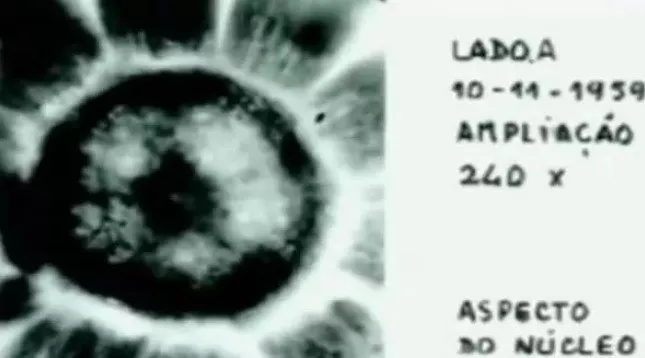
More complex plasma structures — if they exist — could exhibit what appears to be intelligent behavior without being biological in any conventional sense. Plasma physicist David Bohm’s work on plasma behavior in the 1950s led him to observe that plasma could organize into cell-like structures that regenerated when damaged and responded to their environment in ways that resembled living systems. If plasma structures of sufficient complexity exist in the ionosphere or magnetosphere, they could account for a category of UAP reports that describe objects with fluid, non-mechanical movement, apparent luminescence, and electromagnetic interaction with surrounding electronics — without requiring either extraterrestrial spacecraft or conventional biology.
Evidence Supporting the Hypothesis
Several lines of evidence have been cited in support of the atmospheric biology hypothesis, though none individually constitutes proof. NASA’s own astronaut photography archive contains images of elongated, semi-transparent objects in Earth’s upper atmosphere that do not match any known debris, satellite, or atmospheric phenomenon, and that some researchers argue are more consistent with large biological forms than with mechanical objects. The tendency of some UAP to move in ways that suggest buoyancy-based locomotion — rising and falling with atmospheric conditions rather than maintaining constant altitude through powered flight — is more consistent with a living organism exploiting atmospheric pressure gradients than with a craft under powered control.
The frequency with which UAP interact with other UAP — the documented phenomenon of small objects appearing to emerge from or enter larger objects, observed in multiple high-quality cases — could be interpreted as biological rather than technological behavior. Reproduction, feeding, or symbiotic interaction between organisms would produce exactly this visual signature. The absence of solid, metallic properties in a significant subset of UAP reports — objects that appear luminous, translucent, or amorphous rather than mechanically constructed — is also more consistent with biological or plasma-based explanations than with extraterrestrial craft manufacturing.
Scientific Resistance and Its Causes
The atmospheric life hypothesis has received minimal serious scientific attention, for reasons that are partly methodological and partly cultural. The methodological obstacle is that demonstrating the biological nature of a phenomenon requires samples — physical material that can be analyzed. UAP, whether craft or creatures, do not leave samples available for collection. The cultural obstacle is more subtle: proposing that large living organisms exist in Earth’s atmosphere without having been discovered by conventional biology requires either that they are extremely rare, that they occupy atmospheric zones that are inadequately monitored, or that the scientific establishment has systematically failed to recognize evidence that exists in plain sight. None of these possibilities is comfortable for institutional science to engage with.
What makes the hypothesis worth taking seriously is the same thing that makes it difficult to test: its explanatory reach. A living atmospheric creature would explain the fluid, non-mechanical movement patterns reported in many UAP encounters, the absence of hard metallic surfaces in a significant subset of reports, the apparent electromagnetic effects that some UAP produce, and the complete absence of any recovered physical debris from the vast majority of close encounter cases. If even a fraction of the objects reported as UFOs are biological rather than technological, the implications for our understanding of Earth’s biosphere — and of where and in what form life exists — would be as profound as any discovery of extraterrestrial intelligence. The hypothesis deserves better than dismissal.
Discover more from Infinity Explorers
Subscribe to get the latest posts sent to your email.