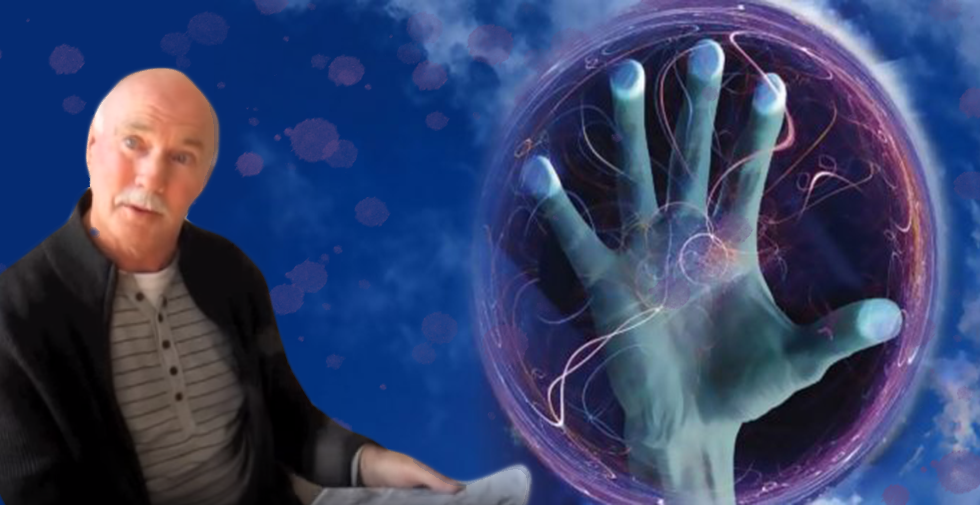

In February 1989, New Zealander Alec Newald set out on a routine three-hour drive from Rotorua to Auckland. He arrived ten days late, with no memory of the missing time, no explanation for his whereabouts, and a set of physical and psychological changes that would permanently alter his life. Under hypnotic regression and in subsequent years of reflection, Newald recovered detailed memories of being taken aboard an extraterrestrial craft and transported to an alien world, where he lived among a civilization of beings so advanced and so different from humanity that the experience reshaped his understanding of consciousness, technology, and the purpose of human existence. His account, published in the book “CoEvolution,” is one of the most detailed and sustained alien contact narratives in the literature.
The Disappearance and Return
Newald was driving through the Urewera National Park region when he encountered a luminous craft hovering over the road in the early morning darkness. His next continuous memory was of arriving in Auckland, believing only a short time had passed, and discovering to his shock that ten days had elapsed. His car showed no mechanical abnormality. He had no injuries. But his health had markedly improved — a chronic shoulder condition he had suffered for years had disappeared entirely, and blood tests conducted in the weeks following his return showed anomalous results that his physician could not account for. He had lost ten days and gained something in exchange: a health transformation and, gradually, memories of where he had been. The combination of missing time, physical evidence of alteration, and improved health distinguishes Newald’s account from purely psychological experiences and has made it a subject of serious investigation by researchers including Bryan Dickeson.
The Alien Civilization He Describes
Newald’s recovered memories describe a civilization he calls the Aari — beings humanoid in general form but distinctly non-human, taller than humans with large eyes, translucent skin, and an apparent age that seemed not to correspond to their physical appearance. Their society was organized around principles of energetic harmony and collective consciousness rather than the individualistic competitive structures of human civilization. Technology in their world was biological and symbiotic rather than mechanical — structures grew rather than being constructed, and the relationship between the beings and their technology was integrative rather than instrumental. Newald describes being shown aspects of their civilization deliberately, as if his visit was instructional rather than incidental: he was being shown a model of what intelligent civilization could look like at a more advanced stage of development.
The Message and Its Implications
Central to Newald’s account is a message about the trajectory of human civilization and its relationship to the natural systems of Earth. The Aari, in his description, expressed concern about humanity’s path — not in alarmist terms but with the patient perspective of beings who had watched civilizations rise and collapse across cosmic timescales. The message focused on the relationship between consciousness, energy, and biological systems, and proposed that human civilization’s fundamental error lies in treating the natural world as a resource to be extracted rather than a living system of which humanity is an integrated part. This theme — an advanced civilization offering a corrective perspective on human environmental and spiritual development — appears across a significant number of extended contact accounts globally, a consistency that researchers find either culturally significant or genuinely instructive depending on their interpretive framework.
Physical Evidence and Subsequent Investigation
The most significant physical evidence in the Newald case is the healing of his chronic shoulder condition — a verifiable physical change that predated his recovery of detailed memories and cannot be attributed to suggestibility or psychological influence. His blood test anomalies, while not retained in publicly accessible medical records, were described as significant enough to prompt his physician to recommend further testing. Newald also described being given small samples of materials from the alien world, which he retained briefly before they degraded or were taken from him under circumstances he describes as related to government interest in his case. His claim that New Zealand intelligence services became aware of his account and conducted surveillance or visits following his return adds a governmental dimension that researchers have been unable to verify but which aligns with patterns documented in other significant contact cases internationally.
Newald’s Legacy in Contact Research
Alec Newald’s “CoEvolution,” published in 1996, remains one of the most complete accounts of an extended contact experience in the literature. Unlike many abduction accounts that focus on frightening or clinical encounters, Newald’s narrative is characterized by a tone of wonder and philosophical depth that researchers find either authentic or suspiciously literary depending on their perspective. His case sits alongside similarly extended contact accounts — including those of Stefan Denaerde (Planet Iarga), George Adamski, and Howard Menger — in a subcategory of contact experiences where the experiencer reports not just an encounter but an education: a sustained transmission of information about advanced civilization, consciousness, and humanity’s potential. Whether these accounts reflect genuine extraterrestrial contact, deep psychological experience, or something in between, they represent a consistent and coherent body of human testimony about encounters with intelligence beyond the ordinary human frame.
Discover more from Infinity Explorers
Subscribe to get the latest posts sent to your email.