
Credit: Armed Forces of Ukraine.
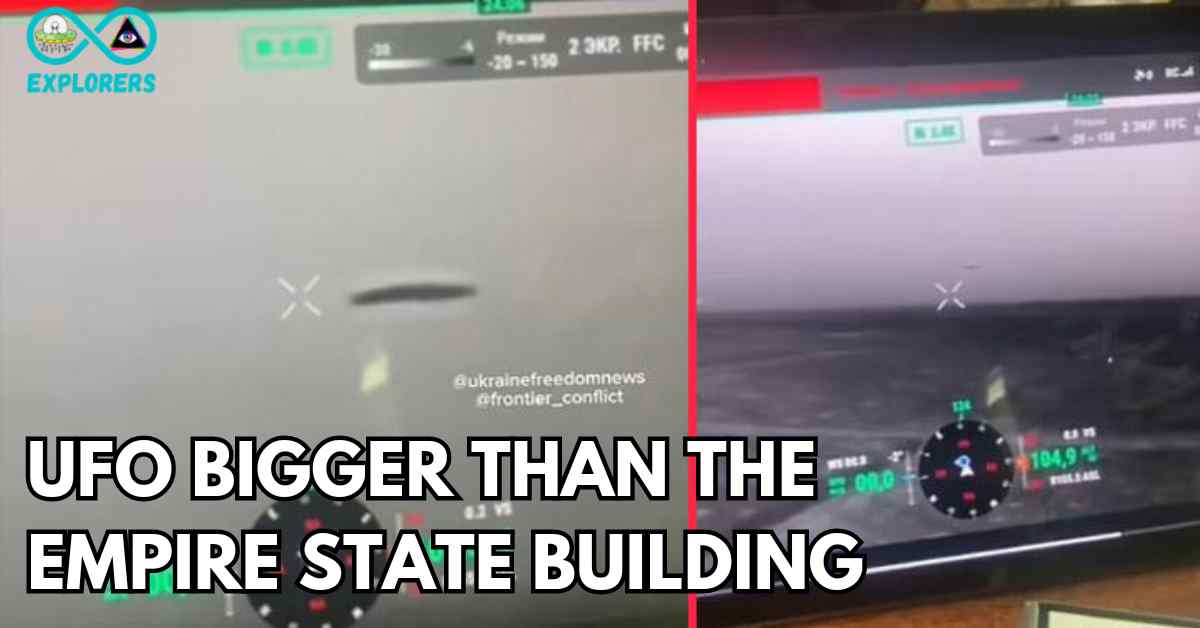
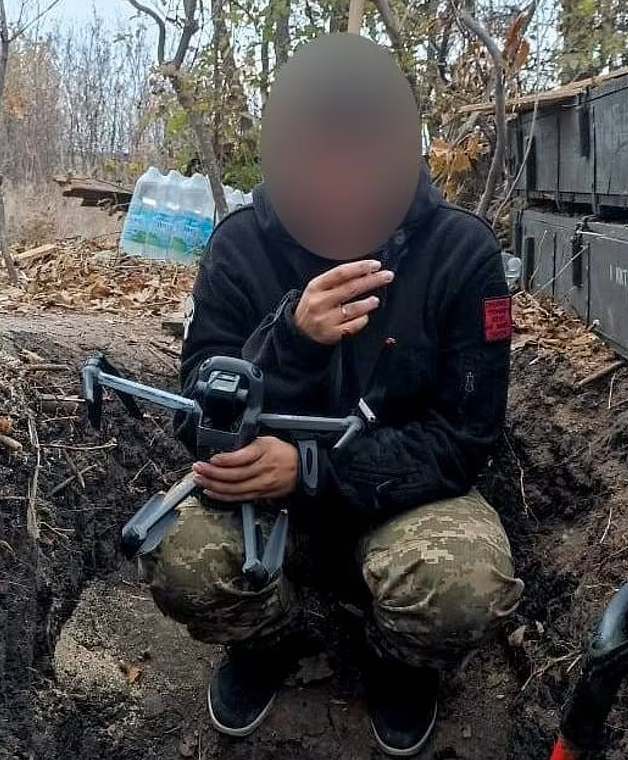
The conflict in eastern Ukraine has generated an unexpected secondary archive of anomalous aerial phenomena documentation. Soldiers deployed to the Donetsk region — equipped with smartphones, body cameras, and military optics — have produced footage of unidentified objects that differs in character from the staged or ambiguous videos that typically circulate in UAP communities. The footage recorded by a Ukrainian soldier showing a massive, slow-moving object over Donetsk belongs to this category of conflict-zone UAP documentation: captured incidentally by trained observers in a high-alert environment, with no plausible motivation for fabrication, and displaying characteristics that separate it from known military aircraft operating in the theater.
The Footage: What the Soldier Captured
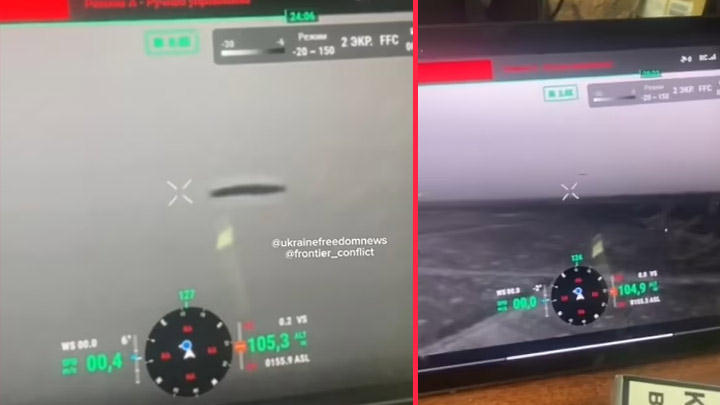
The video was recorded by a Ukrainian soldier positioned in the Donetsk region at a time of active military operations. The object appears at significant altitude and moves slowly across the frame — far more slowly than any fixed-wing aircraft at comparable altitude would move, and with none of the rotor wash, sound, or navigation lighting that would identify it as a helicopter. Its size, estimated by researchers who have analyzed the footage using the background terrain and sky as reference points, is described as substantially larger than any known military or commercial aircraft — in the range of several hundred feet in diameter according to some analyses, though these estimates carry uncertainty inherent in any dimensional analysis of video footage without known reference objects.
The object’s visual profile is consistent across the duration of the footage: a dark, roughly circular or disc-shaped form with no visible propulsion signature — no exhaust plume, no rotor blur, no jet wake. It does not correspond to any known drone profile operating in the Ukrainian theater. Russian and NATO drone inventories operating in the region have been extensively documented, and none match the size, shape, or movement characteristics of the object in the footage. Ukrainian military analysts who informally reviewed the footage reportedly could not identify it as any known system from either side of the conflict.
Why Conflict Zones Produce Credible UAP Footage
Active conflict zones are, counterintuitively, among the most reliable environments for UAP documentation. The reasons are structural rather than coincidental. Military personnel in theater are trained observers whose professional function requires accurate visual identification of aerial objects — getting this wrong has life-or-death consequences. They are equipped with optical devices, cameras, and sensors specifically designed for aerial observation. They operate in a high-alert state that sharpens rather than dulls perceptual accuracy. And crucially, they have no motive to fabricate UAP footage — doing so in a combat environment would be professionally catastrophic and potentially criminal.
The US Navy’s acknowledgment of UAP footage captured by military personnel was partly driven by the recognition that naval aviators — some of the most rigorously trained observers in the world — were encountering objects they could not identify, and that dismissing their reports on principle was incompatible with military discipline. The same logic applies to the Donetsk footage. A Ukrainian soldier in an active combat zone who takes the time to record an aerial object has, by definition, identified it as sufficiently unusual to warrant documentation. That judgment, made by a trained observer in a high-stress operational environment, is itself a form of evidence.
UAP Activity in War Zones: A Documented Pattern
The Donetsk footage is not an isolated incident. UAP activity in and around active conflict zones has been documented since the Second World War, when Allied and Axis pilots both reported encounters with “foo fighters” — glowing, maneuverable objects that tracked aircraft and performed maneuvers that no known aircraft of the era could replicate. These reports came from pilots on both sides of the conflict independently, eliminating the hypothesis that they were enemy secret weapons. The foo fighter phenomenon was never officially explained and was largely suppressed after the war, but it established a pattern of UAP interest in human military activity that has continued to be documented in every major conflict since.
During the Vietnam War, multiple reports from US military personnel described unusual aerial objects observing operations — sometimes hovering over bases, sometimes following military aircraft, sometimes appearing immediately after nuclear-capable aircraft operations. The pattern of UAP proximity to nuclear installations and delivery systems has been documented extensively by researcher Robert Hastings, whose interviews with more than 150 US military veterans established a clear correlation between UAP activity and nuclear-related military sites and operations. The Donetsk sighting, occurring in a region where the possibility of nuclear escalation was a constant strategic concern, fits this pattern precisely.
Analysis of the Object’s Characteristics
Technical analysts who examined the Donetsk footage focused on several specific characteristics. The object’s apparent lack of propulsion signature — no heat bloom detectable in thermal analysis of the video, no acoustic signature despite the large apparent size — is difficult to account for with any known propulsion technology. The movement profile, which shows smooth, constant velocity without the micro-adjustments characteristic of aerodynamic flight, is more consistent with a propulsion system that does not depend on aerodynamic lift than with any known aircraft type.
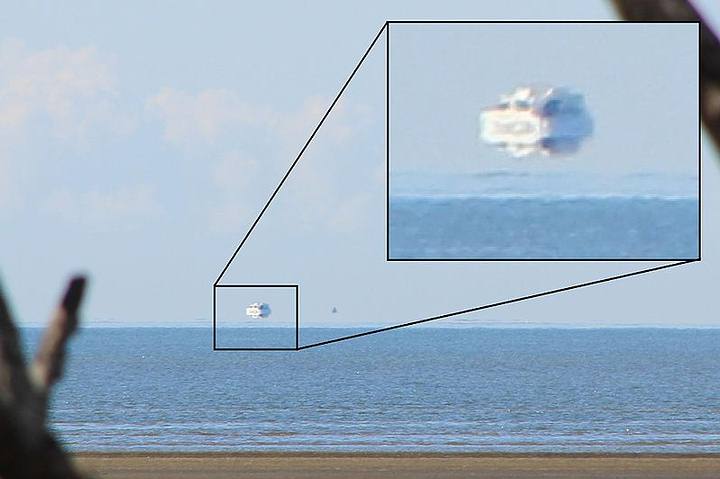
The object’s behavior relative to the surrounding environment — it appears unaffected by the wind conditions that would visibly affect any balloon or lighter-than-air craft at that altitude — argues against atmospheric explanation. Its consistent altitude maintenance without observable thrust argues against any conventional heavier-than-air design. The combination of these negative results — what the object is demonstrably not — leaves a small residual category of possible explanations, and that category is not comfortably populated by any known human technology.
Official Response and Information Blackout
Neither Ukrainian nor Russian military authorities have commented officially on the Donetsk footage or on UAP reports more generally from the conflict zone, which is consistent with the universal military practice of maintaining silence on unidentified aerial contacts that cannot be attributed to known actors. The practical reasons for this silence are obvious — acknowledging large unidentified objects in active airspace raises command and control questions that military institutions are not equipped to answer publicly. What it means for the evidentiary record is that the footage stands without official context, evaluated only by the independent analysts and researchers who have examined it. Their collective assessment — that the object in the footage is genuinely unidentified and displays characteristics inconsistent with any known system — is the closest thing to an official determination that this category of evidence typically receives.
Discover more from Infinity Explorers
Subscribe to get the latest posts sent to your email.