

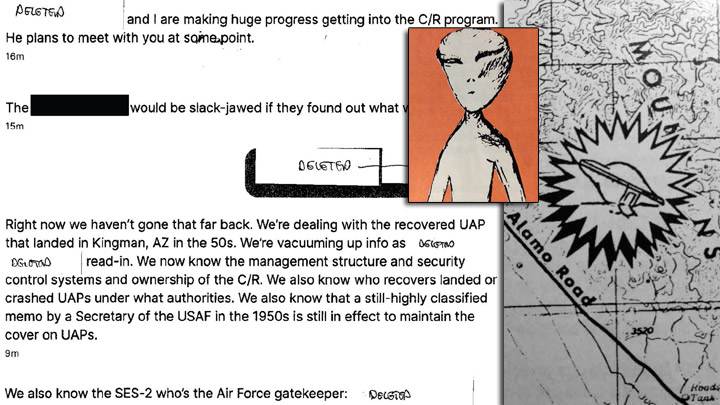
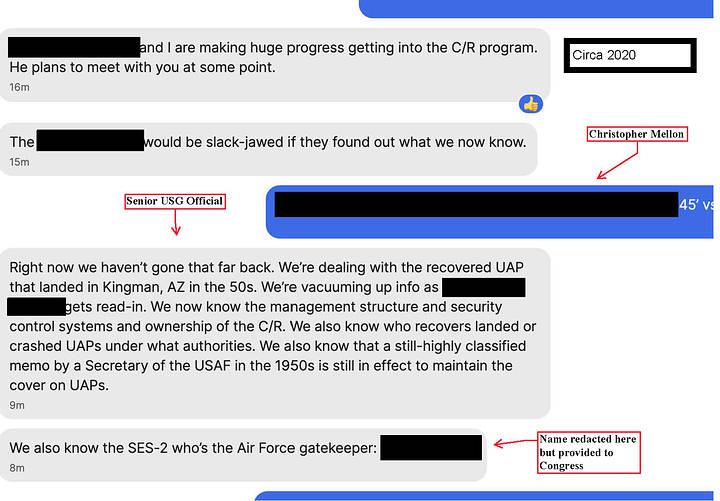
On or around May 21, 1953, something came down near Kingman, Arizona that the United States government has never officially explained. The Kingman UFO crash occupies a peculiar position in the history of UAP research: it is not as culturally prominent as Roswell, and it lacks the same volume of witness testimony, but the credibility of the primary witness and the specific, technical nature of his account have earned it a permanent place among the cases that serious researchers refuse to set aside. Decades after the event, retired aerospace engineer Arthur Stansel broke his silence — and what he described suggests a recovery operation conducted with the same systematic secrecy that witnesses to other crash-retrieval events have described.
The Primary Witness: Arthur Stansel
Arthur Stansel was not a fringe figure. He had a distinguished career as an aeronautical engineer at Wright-Patterson Air Force Base — the same facility that figures prominently in the broader UFO recovery narrative — and had worked on classified projects throughout his career. He was not, in other words, someone prone to fantastical claims, nor someone without the technical background to assess what he had seen. When Stansel finally spoke publicly, decades after swearing an oath of secrecy, he did so under the pseudonym “Fritz Werner” in initial accounts, later confirming his identity to researchers including Raymond Fowler, whose documentation of the case remains the primary source.
Stansel stated that he was transported by bus with approximately fifteen other specialists — engineers, scientists, and technical personnel — to a crash site in the Arizona desert. The participants were told nothing in advance; they were given no briefing, no context, and no explanation for where they were going. They signed secrecy agreements before departure. The bus windows were blacked out so no one could track the route. What they found when they arrived was a craft partially embedded in the desert floor, and Stansel’s job was to analyze its exterior surface and assess the materials used in its construction.
The Craft: Technical Observations
Stansel’s description of the Kingman craft stands out precisely because of its technical specificity. He described an oval or disc-shaped object approximately thirty feet in diameter that had impacted the desert at a shallow angle — not a high-velocity impact, but what he characterized as more consistent with a hard, controlled landing that had gone wrong at the final stage. The craft was largely intact, with damage confined to one section where it had contacted the ground.
The material of the exterior was the detail that most preoccupied Stansel professionally. He described it as metallic in appearance but unlike any alloy he had encountered in his career — not aluminum, not titanium, not any steel variant in use at the time. It did not scratch easily, showed no signs of weld marks or rivets anywhere on its surface, and appeared to be constructed — if that was even the right word — as a single continuous piece. He estimated its thickness by examination of the damaged section and noted that it was far thinner than any known material of comparable structural integrity would require. The exterior surface temperature was also described as anomalously cool given the desert conditions and the time since impact.
The Occupant: What Stansel Saw
Stansel reported that near the craft, a seated figure was being examined by what appeared to be medical personnel. The figure was small — approximately four feet tall — humanoid in general form but with proportional differences from humans that were immediately apparent: a larger cranium, a narrower face, and limbs that appeared longer relative to the torso than human anatomy would suggest. The figure was wearing a silver suit. Stansel stated that he could not determine from his position and the brief time he was permitted in that area whether the figure was alive, dead, or in some intermediate state.
He was not permitted to approach the figure or to speak to the medical personnel attending to it. His access to the site was strictly controlled, and each specialist was given a defined area of examination that did not overlap with others — a deliberate compartmentalization strategy that meant no single civilian witness would have a complete picture of what was at the site. Stansel’s specific assignment was the craft’s exterior surface; others, he assumed, were examining other aspects. No debriefing was held that gave participants a collective account of what had been found.
The Oath and the Silence
Before leaving the site, participants were required to sign a document swearing secrecy. Stansel described the oath as explicit and unambiguous: disclosure of what he had seen would constitute a federal crime punishable by imprisonment. For decades, he honored that oath. He raised a family, continued his career, and told no one. The decision to eventually speak — first under a pseudonym, then under his own name — came late in his life and was, by his own account, driven by a sense that the information was too important to die with him.
His willingness to sign a legally admissible affidavit affirming the truth of his account was noted by researcher Raymond Fowler as significant. People who fabricate stories rarely expose themselves to legal jeopardy by swearing their accounts are true. Stansel’s affidavit, executed in the 1970s, remains part of the documentary record of the Kingman case and has been cited in serious UAP research literature as a credibility marker that distinguishes his testimony from purely anecdotal claims.
Corroboration and Official Response
Stansel was not the only person on that bus. Approximately fifteen other specialists were transported to the Kingman site. None of them has ever publicly confirmed or denied the account — a silence that could reflect ongoing compliance with the secrecy oath or could reflect the absence of an event worth confirming. Researchers who attempted to identify other participants through personnel records from Wright-Patterson encountered the predictable obstacle of classified files. Several FOI requests related to Wright-Patterson operations in May 1953 have returned responses acknowledging classified records that cannot be released.
The Air Force has never officially addressed the Kingman case. It does not appear in the Blue Book files — which is consistent with the hypothesis that crash retrievals were handled through a separate, more highly classified channel that Blue Book investigators themselves did not have access to. Former Blue Book personnel have in various contexts acknowledged that their program was not given access to the most sensitive cases, a pattern consistent with the compartmentalization structure Stansel described experiencing firsthand.
The Kingman Case in Historical Context
The Kingman crash of 1953 sits in a historically significant cluster of alleged retrieval events from the early 1950s — a period that multiple independent sources, including testimony before Congressional oversight committees in the post-2017 era, have identified as particularly active for UAP events and government recovery operations. Whether the pattern reflects reality or selective accumulation of legend around a particularly active era of Cold War aerospace testing remains debated. What is not debated is that Arthur Stansel was a real person with real credentials who signed a real affidavit making specific, testable claims about an event near Kingman, Arizona in May 1953. That much is documented. What it means is a question that the United States government has chosen, for more than seventy years, not to answer.
Discover more from Infinity Explorers
Subscribe to get the latest posts sent to your email.