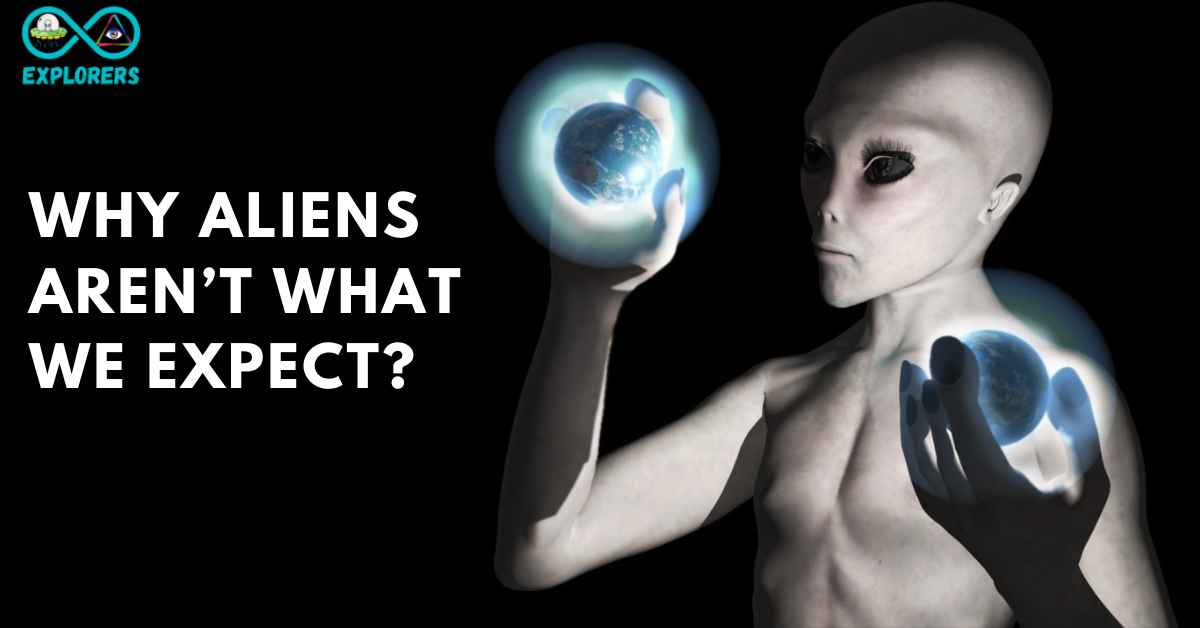

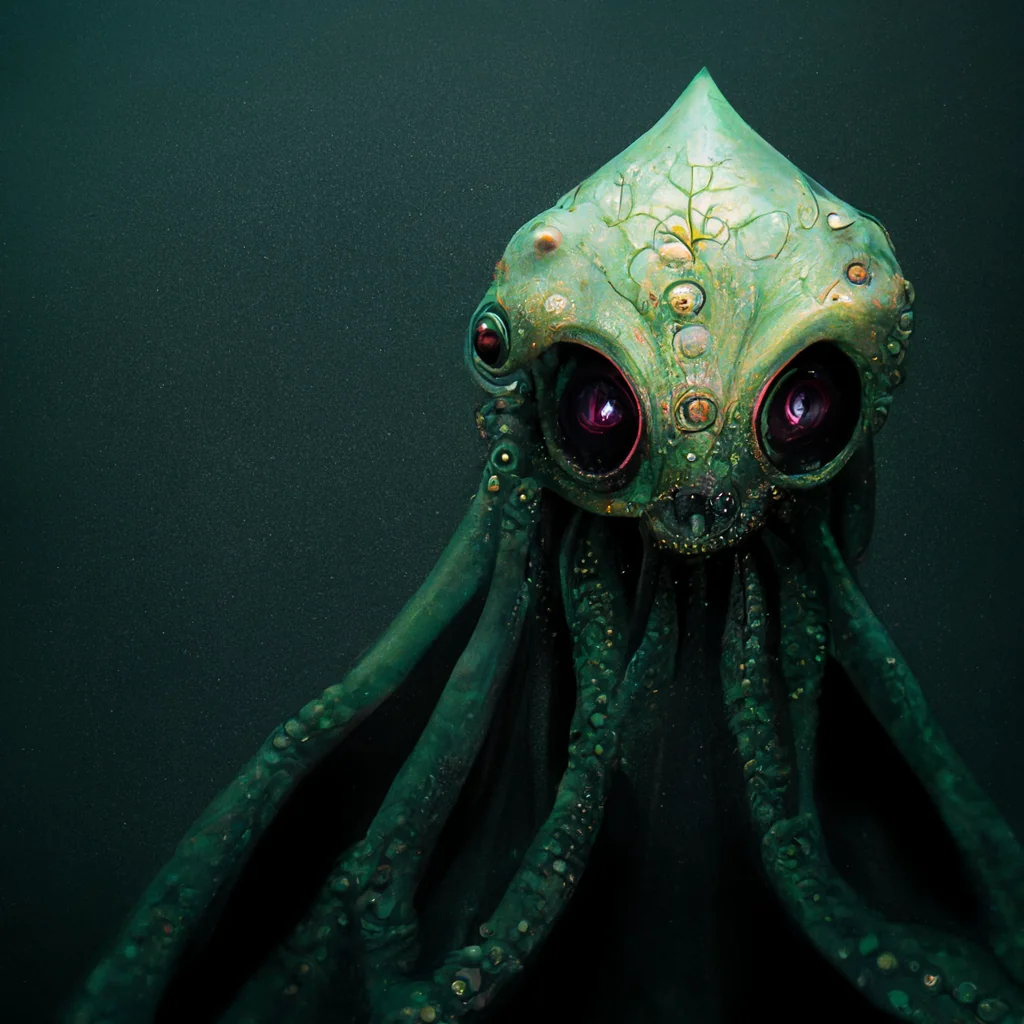
The search for extraterrestrial life has traditionally been directed outward — toward Mars, Europa, Enceladus, exoplanets orbiting distant stars. But a growing body of scientific and research opinion is redirecting the question inward, asking whether non-Earth-origin life might already be present on this planet, either as a surviving remnant of panspermia, as an ongoing presence that has gone undetected, or as a form of life so fundamentally different from the carbon-based biology we recognize that we have not yet developed the tools to identify it. The implications of this possibility are profound — and the evidence being gathered by serious researchers is more compelling than mainstream science has yet publicly acknowledged.
Shadow Biosphere: Life That Doesn’t Match Our Templates
Astrobiologist Paul Davies and molecular biologist Carol Cleland proposed the concept of a “shadow biosphere” — a parallel tree of life on Earth that uses different biochemistry from the life we know, and that has therefore gone undetected because our detection methods are calibrated to find life that resembles us. All known Earth life uses the same genetic code, the same chirality of amino acids, the same basic ATP energy system. If a form of life arose independently on Earth — or arrived here and survived — using different biochemical foundations, it would be invisible to most standard biological assays.
The search for shadow biosphere organisms has been conducted in extreme environments — hypersaline lakes, acidic hot springs, deep-sea hydrothermal vents — where conditions favor any life form that can tolerate extremes, regardless of its biochemical basis. So far, no unambiguously non-standard life form has been confirmed, but researchers note that the search has barely begun and that the methodological challenges are significant. You cannot find what you are not looking for, and most biological surveys are not looking for life that lacks standard DNA.
Panspermia: Life Arrived From Space
The panspermia hypothesis — that life can travel between planets or star systems aboard meteorites, comets, or even in the form of spores drifting through space — has moved from fringe speculation to legitimate scientific discussion over the past two decades. The discovery of extremophile organisms capable of surviving the vacuum and radiation of space, combined with the confirmed presence of organic compounds and even amino acids in meteorites, has established that the basic ingredients and carriers of life can transit interplanetary space. Whether living organisms have actually made that transit and survived impact to seed new worlds — including Earth — remains unconfirmed but is no longer considered implausible.
If Earth was seeded by panspermia, the life that arrived might have continued to evolve separately from Earth’s native biology — or might have merged with it in ways that have obscured its alien origin. The “weird life” that some researchers search for in extreme environments might be exactly this: the surviving lineage of an extraterrestrial seeding event that found a niche in conditions too extreme for Earth’s dominant biology. Identifying such organisms would require not just finding unusual biochemistry but demonstrating that its origin was independent of Earth’s primary evolutionary tree — a challenge that current techniques are only beginning to address.
The UAP Connection: Non-Human Intelligence Already Present
The biological question — is non-Earth-origin microbial life present on Earth? — is distinct from but related to the intelligence question being raised with increasing urgency in UAP research: is non-human intelligence already present on or around Earth, perhaps has been for a very long time? Former intelligence officer David Grusch’s Congressional testimony in 2023 explicitly included the claim that recovered non-human materials and craft suggested a presence of non-human intelligence that was not interstellar in origin — implying a source that is, in some sense, local. This is consistent with the “ultraterrestrial” hypothesis — that what we call aliens have been associated with Earth far longer than human civilization has existed.
Harvard astronomer Dr. Avi Loeb has taken a different but related approach, arguing through his Galileo Project that the scientific establishment’s resistance to seriously examining the extraterrestrial hypothesis — including the possibility of non-human technology operating in Earth’s environment — represents a failure of scientific rigor. His project is conducting systematic searches of Earth’s atmosphere, oceans, and the meteorite record for evidence of technological artifacts of non-human origin. The implicit premise is that such evidence might already exist in data that has been collected but not analyzed through that particular lens.
Deep Ocean and Underground: The Hidden Environments
If non-human life or intelligence exists on Earth in a sustained way, the most plausible hiding places are the ones humans have explored least. The deep ocean — covering seventy percent of Earth’s surface and reaching depths of nearly eleven kilometers — remains largely unmapped and almost entirely unmonitored. The documented pattern of USOs (Unidentified Submerged Objects) operating in deep oceanic environments, including objects tracked by US Navy sonar performing maneuvers impossible for any known submarine, is consistent with the hypothesis of a non-human intelligence operating in undersea environments that have been effectively invisible to human civilization for most of its history.
Similarly, the subsurface geology of Earth — mines, caves, and deep rock formations extending kilometers below the surface — represents an environment that has barely been characterized biologically, let alone searched for non-standard life or intelligence. The discovery of deep biosphere microorganisms in the 1980s — bacteria living kilometers underground, surviving on chemical energy from rock rather than sunlight — demonstrated that life colonizes any accessible niche. Whether more complex life or intelligence has done the same in environments permanently beyond human observation is a question that cannot be answered from the surface.
What This Means for the Search for Life
The possibility that alien life — microbial, complex, or intelligent — already exists on Earth reframes the entire discussion of the search for extraterrestrial life. It means the answer to the Fermi Paradox’s most haunting question — “where is everybody?” — might be: here, in forms or environments we haven’t looked at properly. It means the billions of dollars spent searching distant star systems for radio signals might be complemented, or even superseded, by more careful examination of our own planet. And it means that the UAP phenomenon — whatever its ultimate explanation — deserves to be investigated with the same rigor as any other significant scientific question, because the possibility that it represents evidence of non-human intelligence already present on Earth is now, by any reasonable assessment, a hypothesis that the evidence supports well enough to take seriously.
Discover more from Infinity Explorers
Subscribe to get the latest posts sent to your email.