

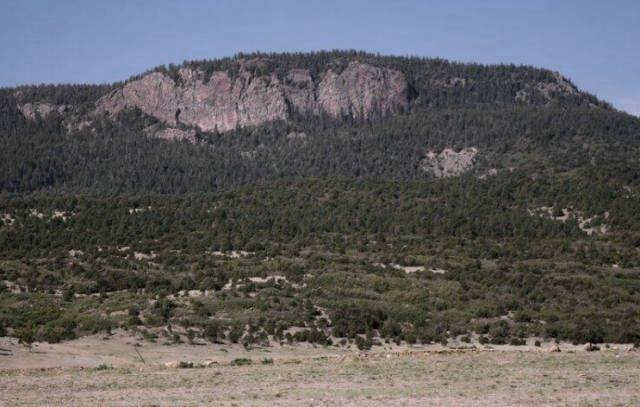
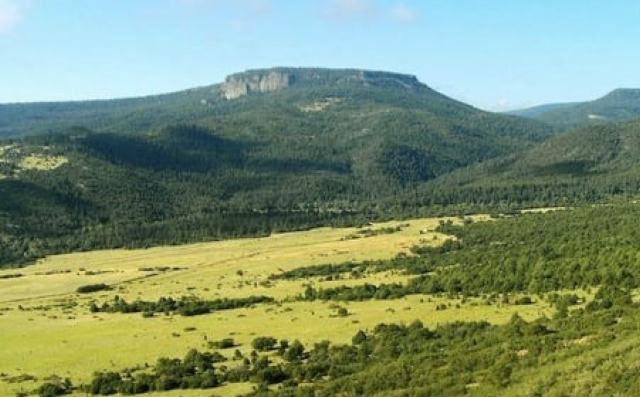
In the Sangre de Cristo Mountains of New Mexico, a peak called Mount Urraca has accumulated a reputation that goes well beyond its modest elevation and unremarkable geological profile. The mountain sits within the boundaries of Philmont Scout Ranch — the largest youth camp in the world — and has been the site of encounters reported by scouts, staff, and researchers over decades that defy conventional explanation: strange lights that move with apparent intelligence, compass failures and electronic malfunctions, accounts of missing time, and persistent reports from indigenous traditions and local residents of a portal or dimensional gateway somewhere on or near the peak. What makes Mount Urraca genuinely interesting to researchers is not any single dramatic incident but the accumulated consistency of reports from unrelated witnesses across a very long timeframe.
The Indigenous Context: A Sacred and Dangerous Place
Before European settlement, the land encompassing Mount Urraca was part of the territory of the Jicarilla Apache and, earlier, the Ancestral Puebloans, whose presence in the region extended back more than a thousand years. Both traditions preserved oral histories describing the mountain as a place of unusual power — not simply sacred in the way that many natural features are considered sacred, but specifically identified as a location where the boundary between the physical world and other dimensions of reality was thin or permeable. These traditions explicitly warned against approaching certain areas of the mountain without proper preparation and specific protective protocols.
This indigenous framework — the concept of thin places or dimensional boundaries associated with specific geographic locations — is not unique to New Mexico. Similar traditions exist in Celtic cultures (where the concept is called a “thin place” or “caol áit”), in Polynesian navigation traditions, in Tibetan Buddhist geography, and in multiple indigenous North American traditions. The cross-cultural consistency of the thin-place concept has led some researchers to propose that it reflects genuine geophysical or geomagnetic anomalies at specific locations — measurable properties of the earth and its electromagnetic field that human sensitivity, before the era of instrumentation, detected and encoded in spiritual rather than scientific language.
Modern Reports: Scouts, Staff, and Strange Lights
The modern record of anomalous events at Mount Urraca begins in earnest with the establishment of Philmont Scout Ranch in 1938 and accelerates as the volume of people passing through the area increased. Scouts on overnight camping trips in the mountain’s vicinity have reported, consistently and independently over decades, light phenomena that do not match known natural sources — orbs and structured lights that move against the wind, hover at fixed altitudes, and in some cases appear to respond to the presence of observers by changing direction or behavior. These reports have been documented by Philmont staff, who maintain informal records of anomalous incidents at various locations on the ranch.
Electronic failures on or near the mountain have been reported frequently enough to be noted in Philmont’s operational documentation. Compasses that behave erratically at specific locations — not through steady deviation consistent with local magnetic deposits, but through rapid, inconsistent spinning — have been reported by multiple independent groups at the same sites over many years. GPS devices and radios that function normally elsewhere on the ranch have failed at specific locations near the mountain, with function returning immediately upon moving away. These reports are not dramatic enough to generate headlines, but their consistency across unrelated groups over a long period constitutes a form of low-level empirical evidence that merits systematic investigation.
The Portal Theory: What Researchers Propose
The portal hypothesis — that Mount Urraca or its immediate vicinity contains a location where matter or energy can transit between dimensions or locations in ways that violate normal spacetime physics — is the most speculative interpretation of the documented anomalies, but it is also the one that the full range of reported phenomena most completely accommodates. The strange lights, the compass failures, the accounts of missing time, the indigenous traditions of dimensional permeability, and the occasional more dramatic reports of figures or objects appearing and disappearing in ways that witnesses find impossible to account for with any conventional explanation all cohere within a portal framework in a way they do not within any alternative.
Researchers who take this hypothesis seriously point to the theoretical physics framework that makes it non-absurd: general relativity permits wormhole solutions that would allow instantaneous transit between distant points or between different regions of the same spacetime. The conditions under which natural wormholes might exist and remain stable are not well understood, but they are not ruled out by known physics. Whether natural geophysical conditions at specific locations — particular combinations of magnetic field strength, subsurface electromagnetic properties, gravitational gradient — could maintain a stable spacetime anomaly is a question that physics cannot currently answer, but cannot rule out.
Connections to the Broader New Mexico Anomaly Zone
Mount Urraca does not exist in isolation as an anomalous location in New Mexico. The state has an extraordinary concentration of documented UAP activity, anomalous phenomena, and classified government installations — a concentration that researchers argue is unlikely to be coincidental. Roswell is in New Mexico. White Sands Missile Range is in New Mexico. Kirtland Air Force Base, which houses nuclear weapons and has been the site of documented UAP encounters, is in New Mexico. The Dulce facility — allegedly a classified underground research installation with connections to non-human activity — is in northern New Mexico, not far from Philmont. The Taos Hum, a low-frequency sound phenomenon heard by residents of the Taos area and investigated by government researchers without satisfactory explanation, is in New Mexico.
Whether this concentration reflects geophysical properties of the region, classified government activity, or some combination of the two is debated. What is documented is that the Four Corners area, of which northern New Mexico is a part, has produced more reported anomalous phenomena per square mile than virtually any comparable area of the continental United States. Mount Urraca, with its decades of consistent anomalous reports and its indigenous history as a recognized power site, fits within this regional pattern rather than standing apart from it.
What Investigation Has Found
Systematic scientific investigation of Mount Urraca’s anomalies has been limited. Philmont Scout Ranch’s primary function is youth outdoor education, not paranormal research, and the institutional culture does not encourage the kind of systematic documentation that would be needed to build a credible scientific case from the accumulated anecdotal reports. Independent researchers who have conducted measurements on the mountain have reported geomagnetic anomalies at specific locations that exceed what the local geology would predict, and electromagnetic field variations that are difficult to account for with known sources. These findings are preliminary and have not been published in peer-reviewed contexts, but they are consistent with the pattern of reports from non-scientific observers.
Mount Urraca remains, for now, one of those locations that sits in the ambiguous territory between documented mystery and unproven legend — too consistently reported to dismiss, too inadequately investigated to confirm. The indigenous wisdom that identified it as a place requiring respect and caution has outlasted the civilizations that produced it. Whatever the mountain contains or is — portal, anomaly, or simply a place where the strange has chosen to congregate — it has been telling people for centuries that it deserves more attention than it has received. That message has not changed.
Discover more from Infinity Explorers
Subscribe to get the latest posts sent to your email.