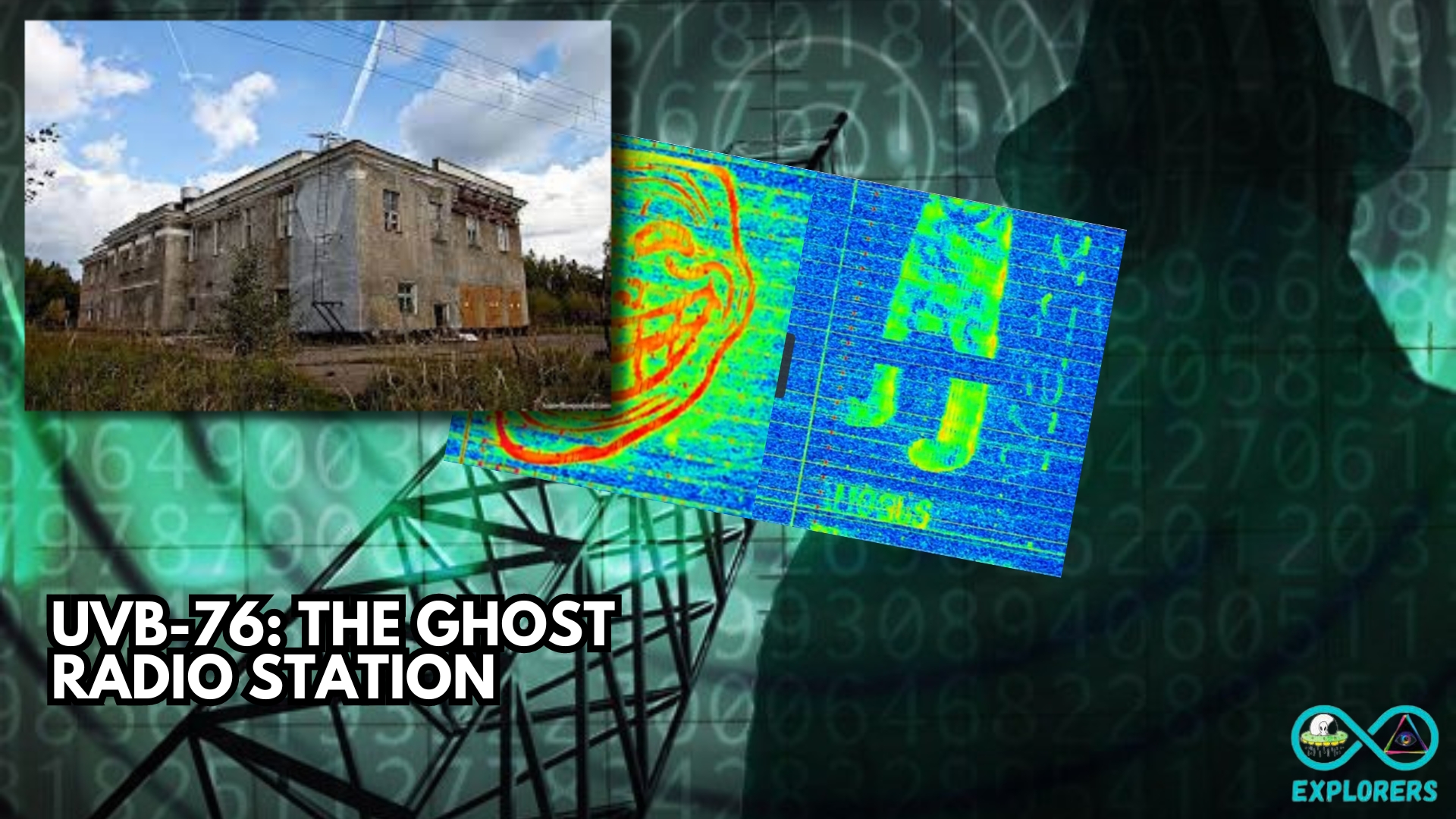

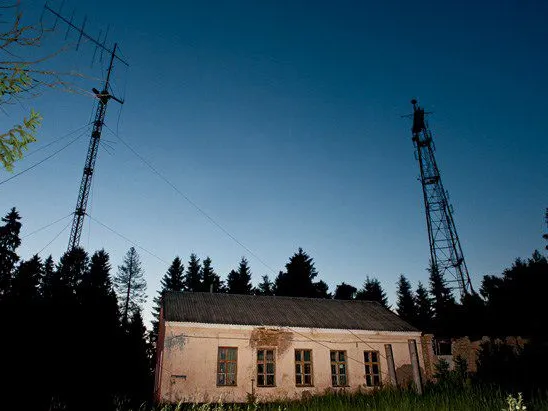
Since 1976, a shortwave radio station has been broadcasting a monotonous buzzing tone — 24 hours a day, 7 days a week, without stopping. Occasionally, a robotic Russian voice interrupts the buzz to read out cryptic strings of names and numbers. Then the buzzing resumes. No government has officially explained it. No one outside a classified circle knows its true purpose. Amateur radio enthusiasts around the world have been listening for decades, and what they’ve pieced together is deeply unsettling.
What Numbers Stations Are — and Why They’re Terrifying
Numbers stations are shortwave radio broadcasts that transmit sequences of numbers, letters, or words in a robotic monotone, usually preceded by a musical tone or repeated callsign. They have existed since World War I. Intelligence agencies use them to communicate with field agents and spies — the broadcasts are one-way, unencrypted in a detectable sense, but the sequences are encoded using one-time pads, making them mathematically unbreakable without the corresponding key. A spy in a foreign country can receive instructions via an ordinary shortwave radio without any traceable two-way communication.
Most numbers stations went dark after the Cold War ended. UVB-76 did not. It kept buzzing. That alone sets it apart from almost every other known numbers station in history.
The Signal: 4625 kHz, 25 Buzzes Per Minute
UVB-76, nicknamed “The Buzzer” by the global community of shortwave listeners who monitor it, broadcasts primarily on 4625 kHz. The signal is a repetitive buzzing tone — approximately 25 pulses per minute — that has continued almost without interruption for five decades. The sound is distinctive, slightly mechanical, and deeply monotonous. Recordings of it exist going back to the late 1970s.
In 2010, the station moved its primary transmission frequency from its original location and also appeared to relocate its physical broadcasting equipment. Listeners who had triangulated the signal to a facility near Povarovo, outside Moscow, noted that the new signal appeared to originate from a different site closer to St. Petersburg. The move was unannounced. No explanation was given. The buzzing simply shifted frequencies and continued.
“Since 1976, it has buzzed. Governments have collapsed, the Soviet Union has dissolved, the internet has transformed civilization — and The Buzzer has not stopped.”
The Voice Messages Nobody Has Decoded
Scattered throughout UVB-76’s history are rare voice transmissions that interrupt the tone. These messages are in Russian and follow a consistent format: a callsign (UZB-76 or similar), followed by a name or series of names, followed by groups of numbers. A typical transmission sounds like: “UVB-76, UVB-76 — Zhenya, 93, 882, Nadezhda, 14, 0713, 14, 9, Mikhail 27.” Then the buzzing resumes.
These transmissions are irregular and rare — sometimes months pass without one, then several appear in quick succession. In 1997, a transmission occurred that listeners found particularly disturbing: multiple voices were heard simultaneously, as if different parties were speaking over one another, followed by ambient sounds — shuffling, what might have been breathing — before the tone resumed. In 2010, a similar anomaly occurred. No context was ever provided.
The 2022 Spike: Ukraine and the Silence That Wasn’t
When Russia invaded Ukraine in February 2022, the global community of UVB-76 listeners noticed something significant: transmission activity increased. The station, which had been mostly quiet in the preceding period, began broadcasting more voice messages and showing signs of increased operational activity. Whether this represents the station fulfilling an active communication function in wartime, or simply reflects maintenance and testing of a standby system, is unknown.
The correlation was noted widely in intelligence and signals-monitoring communities. Several analysts who follow Russian military communications pointed out that UVB-76’s operational behavior during the invasion period was consistent with a command network being brought to higher readiness. This doesn’t prove anything — but it’s the kind of evidence that makes the mundane explanations harder to sustain.
Three Theories — One More Disturbing Than the Last
The most straightforward theory: UVB-76 is a military communication network used to transmit encoded orders to field personnel and agents. The buzzing tone serves as a carrier signal and a synchronization mechanism — receivers can tune in and verify the channel is active without any traceable two-way communication. The voice messages are one-time-pad encoded instructions. Under this theory, the station is unusual in its longevity but not mysterious in its function.
The second theory is more sobering: UVB-76 may be a component of Russia’s nuclear command architecture. Dead man’s switch systems — automated networks that trigger nuclear launches if command authority is destroyed — require constant active signals. A station that has broadcast continuously for 50 years, that spikes in activity during wartime, and that would presumably go silent if the broadcasting infrastructure were destroyed, fits this profile. Russia’s “Perimeter” system (known in the West as “Dead Hand”) is a documented nuclear automatic retaliation network. Whether UVB-76 is connected to it is classified.
The third theory, favored by some intelligence analysts: UVB-76 coordinates sleeper agents and intelligence assets embedded in foreign countries. The names in the voice messages are activation codes. The numbers are mission parameters. Under this reading, somewhere in the world, someone is listening for their name — and when they hear it, they move.
“Somewhere in the world, someone may be listening for their name on a shortwave radio right now. When they hear it, they act. That’s the theory. Russia has never denied it.”
Russia’s Official Position: Silence
The Russian government has never officially acknowledged UVB-76. No ministry has confirmed its purpose, its operators, or its funding. When pressed, Russian officials have deflected or denied knowledge. This is itself informative: other Russian military communications infrastructure that became public knowledge has been officially acknowledged in general terms. The complete official silence surrounding UVB-76 suggests either that its purpose is too sensitive to acknowledge, or that acknowledging it would confirm something the Russian government prefers to leave ambiguous.
The station continues to broadcast today. You can tune in yourself — 4625 kHz on a shortwave receiver, or via dozens of online streaming services maintained by the global listener community. The buzz is exactly what it has always been: steady, patient, purposeful, and completely unexplained. Fifty years of transmission with no public accounting. Whatever UVB-76 is for, Russia intends to keep doing it.
Discover more from Infinity Explorers
Subscribe to get the latest posts sent to your email.