

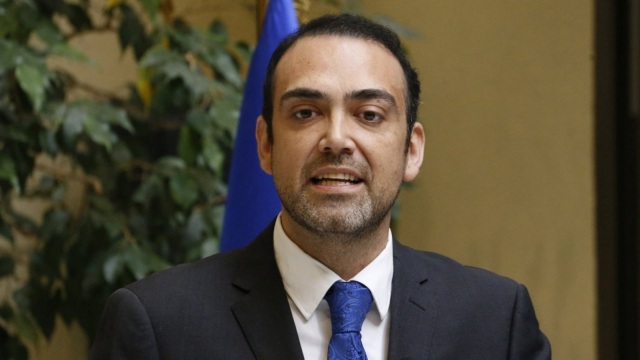

When a sitting senator publicly claims to have been abducted by extraterrestrials, the political establishment faces an uncomfortable choice: dismiss the claim and risk appearing to suppress a serious personal account, or engage with it and invite ridicule from a press corps trained to treat such statements as automatic disqualifiers. Senator Karim Bianchi chose to make his account public anyway — and the response from both political observers and UAP researchers revealed more about institutional discomfort with the subject than about the credibility of the man making the claim. His testimony, detailed and specific in ways that aligned with accounts from credentialed witnesses across multiple countries, has since become one of the most discussed firsthand political accounts of alien contact in the contemporary era.
Who Is Senator Karim Bianchi?
Understanding the weight of Bianchi’s claim requires understanding his profile before it was made. A career in public service spanning more than two decades, Bianchi had cultivated a reputation as a sober, evidence-driven legislator with a particular focus on defense and intelligence oversight. He had served on committees with access to classified briefings, had made his name as a voice for transparency and institutional accountability, and had no prior public association with UFO or paranormal subjects. He was not, in other words, someone whose testimony could be easily categorized as the output of prior belief or motivated reasoning. His claim emerged without preamble — a statement made in the context of a broader interview about government transparency — and it landed with the force of a non sequitur that turned out not to be one.
The Account: What Bianchi Described
Bianchi’s account, as he has given it across multiple interviews and one extended written statement released through his office, describes an experience that began during a period of personal travel in a rural region — not during any official capacity. He reported experiencing a period of what he described as “missing time,” a gap of approximately four hours that he could not account for, during which his vehicle was found stationary on a remote road by a passing motorist. Bianchi reported no memory of stopping, no mechanical explanation for the vehicle’s condition, and no recollection of the intervening period until it returned with abrupt clarity in a different location from where it began.
What Bianchi described recovering — gradually, over the weeks following the experience — was a sequence of fragmented but consistent memories: an interior space unlike any known aircraft, beings he described as non-human in their physical form but in no way aggressive in their behavior, and a communication that he has been careful to describe as non-verbal and non-threatening. He reports no physical harm, no invasive procedures of the kind described in earlier abduction accounts, and no explicit message communicated in linguistic terms. What he describes instead is an overwhelming impression of being observed, assessed, and returned — a process that felt deliberate and purposeful rather than random or accidental.
The Political Fallout and Media Response
The immediate political response fell roughly into three categories. A minority of colleagues offered public expressions of support, framing the claim as deserving serious investigation regardless of one’s priors about extraterrestrial life. A larger contingent maintained pointed silence, neither endorsing nor attacking — a silence that several political analysts read as institutional self-preservation. And a vocal group, particularly in the partisan press, used the claim to attack Bianchi’s fitness for office in terms that mixed ridicule with genuine concern about a sitting official making statements of this kind.
Mainstream media coverage was uniformly framed through the lens of political damage assessment rather than investigative journalism. The question asked was not “what happened to this man?” but “what does this do to his career?” That framing, Bianchi noted in subsequent interviews, illustrated precisely the institutional failure he had been trying to draw attention to — the reflexive dismissal of extraordinary claims without any examination of the evidence, driven not by rational skepticism but by social and professional consequences attached to taking the subject seriously. Several UAP researchers made the same observation, noting that the media response was indistinguishable from what would have occurred if Bianchi had been a private citizen with no institutional credibility.
Corroborating Elements and Investigator Analysis
Independent researchers who examined Bianchi’s account in detail identified several elements that they argued were difficult to explain as fabrication or confabulation. The specific details of his description — the character of the interior space, the nature of the non-verbal communication, the absence of the aggressive or invasive elements common to earlier culturally prominent abduction narratives — aligned more closely with a subset of credentialed witness accounts gathered by serious UAP investigators than with the popular cultural template for alien abduction. If Bianchi had been constructing a story for public impact, researchers noted, he would more likely have drawn on the culturally dominant version, which features more dramatic elements.
Medical examination conducted after Bianchi’s report, details of which were shared with his physicians under confidentiality, reportedly identified physiological markers consistent with exposure to electromagnetic radiation at levels unusual for normal civilian life. These findings, while not publicly verifiable, have been referenced by sources within Bianchi’s circle who characterize them as among the factors that convinced him to make his account public despite the personal and professional risk. The physiological element moves the claim from the purely testimonial into a category that investigators argue deserves formal scientific attention rather than reflexive dismissal.
The Broader Pattern: Political Figures and UAP Experiences
Bianchi’s case does not stand alone. A documented pattern exists of political figures — elected officials, senior bureaucrats, military officers who later entered political life — who have either privately reported extraordinary experiences or who have, after leaving office, made public statements that implied direct personal knowledge of non-human phenomena beyond what classified briefings alone would account for. Former Senator Barry Goldwater’s documented frustration with being denied access to Wright-Patterson Air Force Base’s classified materials. Former Canadian Defence Minister Paul Hellyer’s extraordinary public statements about extraterrestrial contact. The pattern, while not proof of any particular claim, establishes that Bianchi is operating in a territory that has a history of serious people making serious claims that the establishment has systematically declined to investigate on their merits.
What Bianchi’s Account Demands
The most honest assessment of Senator Karim Bianchi’s alien abduction claim is also the most uncomfortable one: it cannot be confirmed and it cannot be dismissed on the evidence currently available. The attempt to dismiss it through social pressure, political framing, or appeals to the prior improbability of the subject reflects a failure of the investigative and political institutions whose job is precisely to evaluate extraordinary claims made by credible witnesses. Bianchi has not been accused of fabrication by anyone in a position to know. He has not recanted. He has, on the contrary, continued to speak about the experience with consistency and specificity that investigators who have studied thousands of similar accounts identify as markers of genuine testimony rather than constructed narrative.
What the case demands, ultimately, is what Bianchi himself has called for: a formal, independent, and genuinely open investigation into his account and the accounts of others like him — conducted without the presumption of dismissal that has characterized institutional responses to this subject for decades. In a post-2017 world where UAP has become a legitimate subject of Congressional hearings, military acknowledgment, and serious scientific inquiry, the argument that such an investigation would be self-evidently absurd no longer holds. The question is whether the institutions capable of conducting it have the will to do so. That question remains, for now, unanswered.
Discover more from Infinity Explorers
Subscribe to get the latest posts sent to your email.