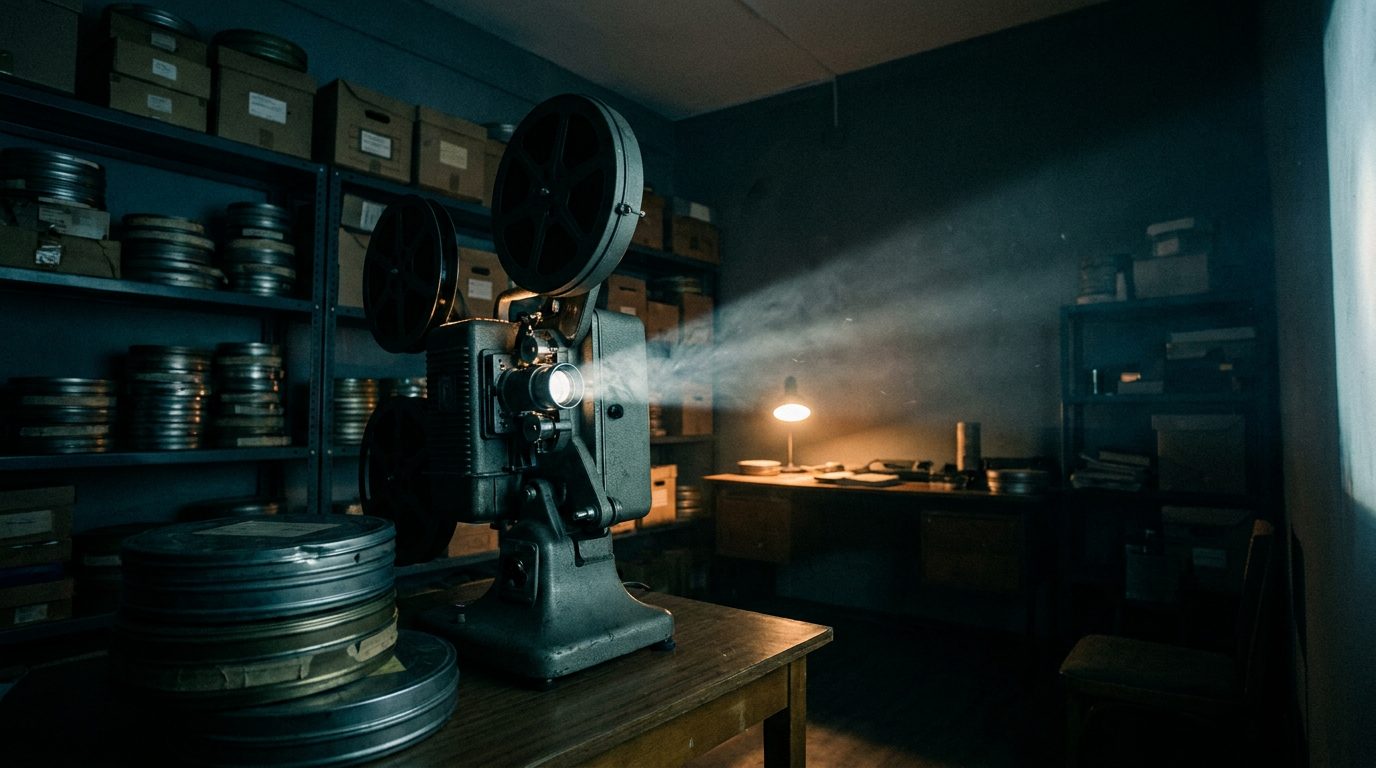

There is a film reel from 1952 that almost nobody alive has seen, and a congressman is now trying to pry it loose. It is catalogued as “AF-ATIC-FILM, 03/52” and labeled, in the plain language of the era, a “flying saucer talk.” The man giving the talk on the reel is Edward J. Ruppelt, the Air Force officer who ran Project Blue Book and who literally coined the term “unidentified flying object.”
Representative Eric Burlison sent a formal letter to MIT Lincoln Laboratory asking the institution to locate that recording, determine its current status, and coordinate with the National Archives on preserving it. According to Burlison, the lab’s attorneys responded quickly and said they would comply within 30 days.
Why a 1952 reel matters in 2026
Most of the disclosure fight is about recent encounters, modern sensor footage, and what the government is hiding now. This is the opposite. It reaches back to the very beginning of the official UFO era, to the moment the Air Force was first trying to figure out how to talk about the phenomenon internally.
Ruppelt is not a minor figure. He led the Air Force’s early systematic study of the subject and wrote the first sober insider account of it. A briefing film of Ruppelt addressing a “flying saucer talk” in March 1952 would be a primary-source window into how the military actually understood these reports at the start, before decades of denial hardened around them. That is why a 74-year-old reel is suddenly congressional business.
Why it sits at a private lab
The detail that makes this more than a history project is where the reel lives. MIT Lincoln Laboratory is a federally funded research and development center, a private institution that does sensitive work for the government. Burlison’s broader argument, which he has made while pressing several contractors, is that some of the government’s most sensitive UFO-related material may have been routed through private organizations precisely because that placement keeps it further from congressional oversight and public-records law.
Whether or not that is true of this particular film, the pattern is the point. If early UAP material ended up in the archives of private labs rather than in government files, then the story of the cover-up is partly a story about institutional plumbing, about how records were moved to where the usual rules do not reach.
What Burlison actually asked for
The request was specific. He asked MIT Lincoln Laboratory to determine the recording’s current status and to work with the National Archives and Records Administration on preservation and archival review. This is not a demand to declassify and dump it tomorrow. It is a demand to confirm the reel exists, establish its condition, and put it into a formal preservation process so it cannot quietly disappear.
That is a careful way to do it. A reel that is acknowledged, located, and handed to the National Archives is much harder to lose than one whose existence is never formally established. Burlison is, in effect, trying to make the film a matter of record before anyone argues about what is on it.
The bigger pattern
This letter is one piece of a wider effort. The same congressman has pressed other contractors for UAP records going back decades, and the broader 2026 disclosure push has been built on the idea that the evidence exists and simply needs to be forced into the open. A single 1952 film will not settle anything by itself. But it is a clean test of the whole theory. Either the reel is found, preserved, and eventually shown, or it is not, and the answer to that will say something about how reachable the rest of the hidden record really is.
What to watch
The 30-day window puts the lab’s response in early summer. The thing to watch is not just whether the film is located, but whether it actually reaches the National Archives in a form the public can eventually see. A reel that is confirmed to exist but stays sealed is its own kind of answer.
Sources
- Rep. Burlison: Requests Review of Identified 1952 UAP Recording
- NewsNation: Lawmaker targets private labs in search of information
- The Hill: GOP Rep. Burlison targets private labs
Discover more from Infinity Explorers
Subscribe to get the latest posts sent to your email.