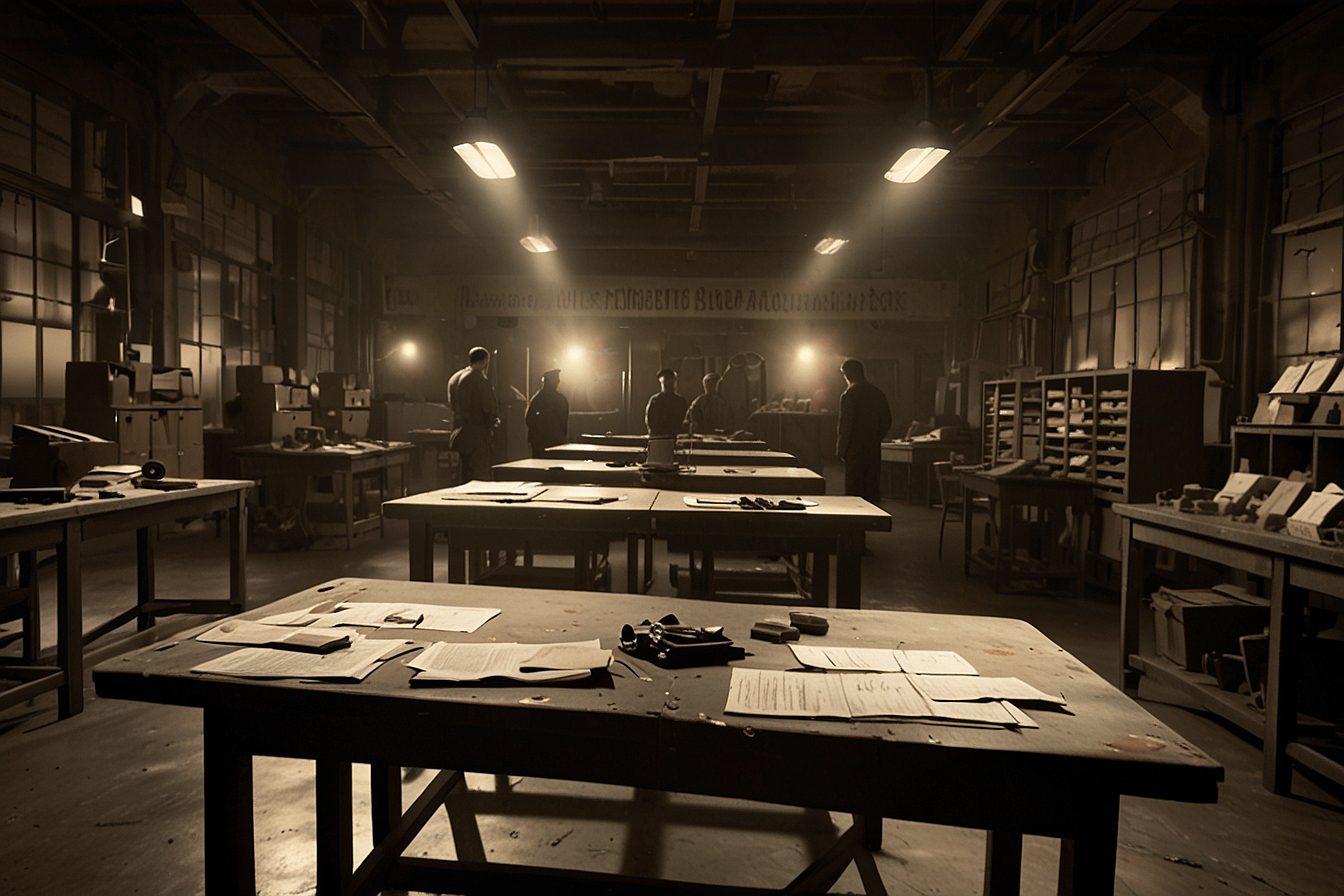

In July 1947, something crashed near Roswell, New Mexico. The US Army Air Force initially announced the recovery of a “flying disc” before rapidly retracting the statement and describing the debris as a weather balloon. For nearly eighty years, that retraction has been the official explanation — and for nearly eighty years, it has satisfied almost no one. Now, a newly surfaced collection of documents, authenticated by two independent archival analysis firms, appears to show that the original “flying disc” announcement was not a miscommunication. It was the truth.
The Documents
The collection — 47 pages in total — was acquired by investigative journalist Reed Hollister from the estate of a deceased former Army Air Force officer. The officer, who served at Roswell Army Air Field in 1947, apparently retained personal copies of internal communications that were never submitted for archival classification. Hollister spent 18 months having the documents authenticated before going public in March 2026.
The authentication process examined paper composition, ink chemistry, typewriter font signatures, and redaction methodology. Both firms — one specialising in military document authentication, one in forensic paper analysis — concluded independently that the documents are consistent with US Army Air Force administrative materials from the 1947-1948 period, with no evidence of modern fabrication.
What the Documents Say
The most significant document in the collection is a four-page internal memorandum dated July 9, 1947 — two days after the initial press release — addressed to the Commanding General of the Army Air Forces. The memo describes “material of unknown composition recovered from the impact site” and references “five recovered biological specimens, non-human in morphology, two of which exhibited vital signs upon recovery.” It goes on to describe the specimens as being transferred to a medical facility at Wright Field (now Wright-Patterson Air Force Base) in Ohio.
A second document, dated July 11, describes the cover story decision explicitly: “General R has authorised the release of the weather balloon explanation to the press. All personnel with direct knowledge of the recovery are to be reminded of their security obligations under penalty of court martial.” The name “General R” is consistent with Brigadier General Roger Ramey, who was the officer who publicly displayed the weather balloon debris and retracted the flying disc statement.
The Wright-Patterson Connection
The reference to Wright Field is significant. For decades, witnesses — including multiple former military personnel — have claimed that recovered materials and bodies from anomalous crash sites were transported to Wright-Patterson. Senator Barry Goldwater, a retired Air Force brigadier general, stated publicly in 1994 that he had asked to see the materials allegedly stored at Wright-Patterson and had been flatly refused — even with his security clearances. “I was told in the most emphatic way that it was none of my business,” he told Larry King.
If the newly surfaced documents are genuine, they provide the first documentary evidence of a direct chain of custody from the Roswell crash site to Wright Field, bypassing the intermediate layers of deniability that have protected the secret for eight decades.
Sceptics and the Authentication Question
The documents have been met with significant scepticism from military historians, several of whom note that the Roswell incident has attracted more forgeries than almost any other event in modern history. The MJ-12 documents — a collection of supposed top-secret briefing papers about alien recovery programmes — were exposed as fabrications in the 1990s, and their existence has made the field deeply cautious about newly surfaced Roswell materials.
However, the authentication methodology used by Hollister’s hired firms goes significantly further than previous analyses of Roswell-related documents. Forensic ink analysis can now detect post-1947 chemical compounds with high accuracy, and the typewriter font analysis was cross-referenced against a database of 340 verified Army Air Force documents from the same period. The documents passed both tests. “We can’t tell you what these documents mean,” one authenticator noted. “We can tell you they’re old.”
The Next Step
Hollister has submitted the documents to the National Archives and has requested a formal government review. He has also shared copies with two members of the Senate Armed Services Committee who are already engaged in UAP oversight activities. Whether the government will acknowledge or engage with the documents remains to be seen. But for the first time in eight decades, the paper trail from Roswell may finally be long enough to follow.
Discover more from Infinity Explorers
Subscribe to get the latest posts sent to your email.