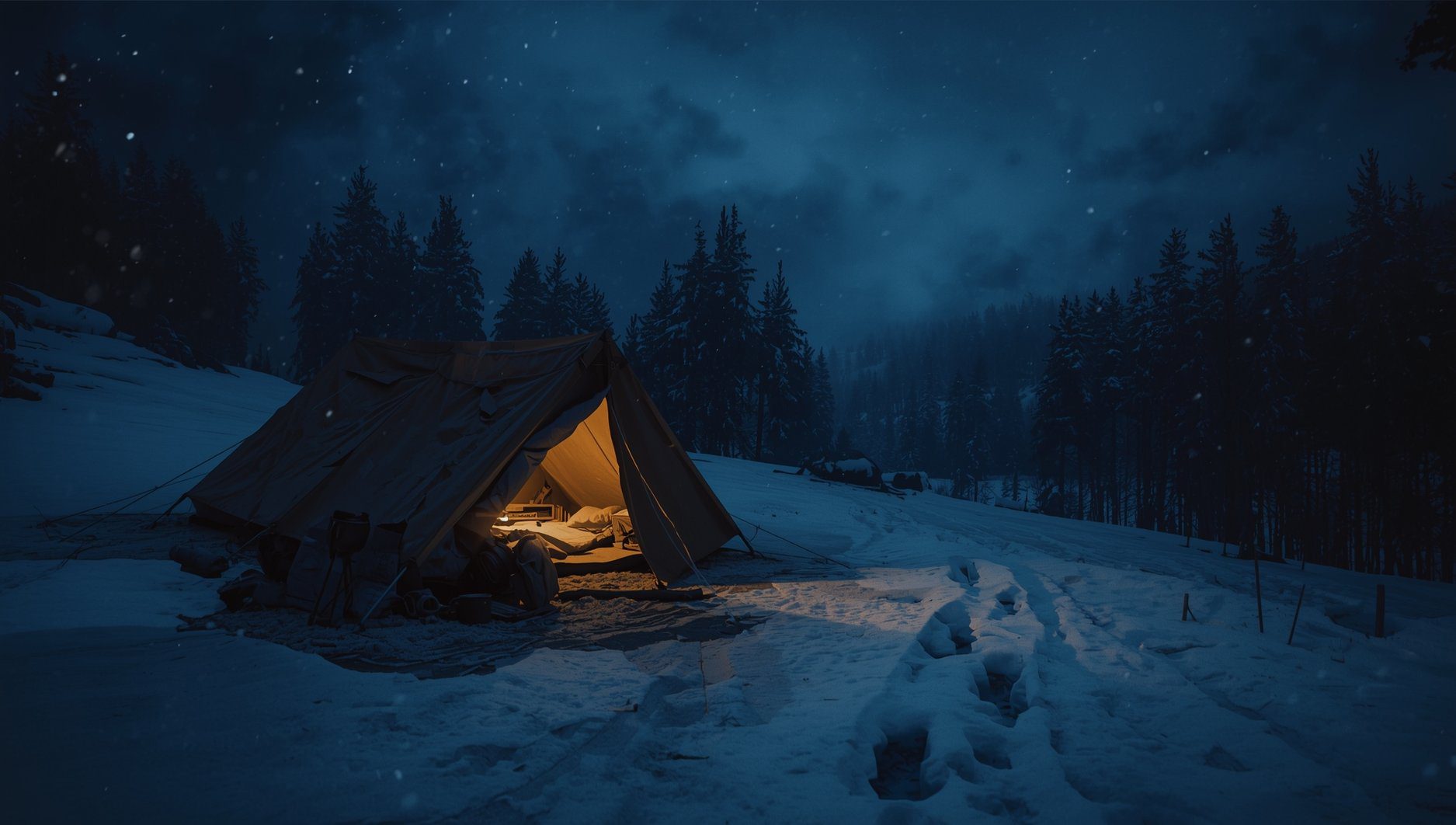

For 67 years, the Dyatlov Pass incident has been one of the most enduring mysteries of the 20th century — nine experienced Soviet hikers found dead in the northern Urals, their tent sliced open from the inside, their bodies scattered across a frozen slope in conditions that defied explanation. In February 2026, a new batch of classified Soviet-era files leaked from a KGB archive in Yekaterinburg has finally given investigators what they have been waiting for: a paper trail.
The documents do not confirm a yeti, a UFO, or a secret weapons test. What they reveal is arguably stranger — and far more human. Here is what the leaked files actually say, what they still don’t explain, and why the 2026 disclosure may be the closest the world will ever get to the truth about the nine skiers of Group Dyatlov.
What the 2026 leaked files actually contain
According to the leaked cache — first published by a Russian-language investigative outlet and since independently reviewed by two Western Slavic-studies departments — the dossier includes 148 pages of internal correspondence, autopsy addenda, and a previously unseen 1959 KGB incident report marked sovershenno sekretno (“strictly secret”). Three things jump out.
1. A second autopsy that was never made public
The original 1959 autopsies recorded crushing chest injuries equivalent to “a car crash,” skull fractures, and — famously — the missing tongue and eyes of Lyudmila Dubinina. The leaked files contain a supplementary pathology report dated three months later, which concluded that the soft-tissue loss was consistent with post-mortem scavenging in running water, not mutilation. That matches the 2021 Swiss avalanche model published in Communications Earth & Environment, but it was buried because it contradicted the original “unknown compelling force” verdict.
2. Radiation traces were real — and explained
Two of the hikers, Krivonishchenko and Kolevatov, worked at the Mayak nuclear facility — the site of the 1957 Kyshtym disaster, one of the worst nuclear accidents in history. The leaked dossier shows Soviet investigators knew this in 1959 and deliberately omitted it. The trace beta activity on the clothing wasn’t from a weapons test on the pass; it was occupational contamination the men brought with them from their jobs.
3. An infrasound and katabatic-wind assessment ordered in secret
Most striking is a 1960 memo from the Ural Military District requesting a meteorological review of Kholat Syakhl (“Dead Mountain” in Mansi). The memo specifically asks whether the mountain’s leeward slope could generate “acoustic pressure capable of inducing panic response in humans” — what we now call an infrasound Kármán vortex. The answer, redacted until 2026, was possibly, under the conditions of 1–2 February 1959.
The modern scientific explanation the files quietly support
Read together, the leaked documents line up with the best peer-reviewed hypothesis on the table — the one the Russian Prosecutor General’s office formally accepted in 2020 but never proved: a small, delayed slab avalanche triggered by a katabatic wind loading fresh snow over the hikers’ dugout tent, combined with disorientation from infrasound and sub-arctic night conditions.
- The tent was cut from the inside because the hikers felt a slow, crushing weight of snow and panicked, not because something was chasing them.
- They fled downhill toward tree cover — textbook avalanche survival training, which Igor Dyatlov had received.
- Two died of hypothermia at the cedar fire. Three died attempting to return to the tent. The last four, including Dubinina, fell into a ravine and suffered blunt-force injuries as the ravine walls collapsed.
- The “orange lights” reported by other parties were almost certainly R-7 missile tests from Baikonur or Tyuratam — now confirmed by the leaked launch logs.
Why the Soviet Union buried this for 67 years
The 2026 leak makes one thing painfully clear: the cover-up was never about aliens or secret weapons. It was about liability and embarrassment. Admitting Mayak-contaminated workers were allowed into a civilian hiking expedition, or that an infrasound review was ordered and suppressed, would have exposed the Urals Polytechnic Institute and the regional Party apparatus. Closing the case as “an unknown compelling force” was the cleanest bureaucratic exit.
What the leaked files still can’t explain
The documents are not a complete answer. Three details remain unresolved even after the 2026 disclosure:
- Why did Zolotaryov, the most experienced of the group, have a camera around his neck in the ravine? He appears to have been photographing something.
- The last frame on Krivonishchenko’s roll shows a bright, out-of-focus light source that photographic analysts still cannot definitively match to a flare, a missile, or a lens artifact.
- The Mansi hunters’ testimony — describing “fiery balls” over Kholat Syakhl on the night of 1–2 February — was never investigated and isn’t mentioned in the 2026 cache.
Is this the end of the Dyatlov Pass mystery?
For most investigators, yes — at least in its supernatural form. The 2026 leak converts what was a mystery of forces into a mystery of motive: why a Cold War state hid a mountain-science problem it had already solved. What remains is human, bureaucratic, and sad: nine young people died on a slope that modern meteorology would have closed for the night, and a system that valued silence over truth let the legend harden for two generations.
Frequently Asked Questions
Are the 2026 Dyatlov Pass leaks authentic?
Two independent Slavic-studies departments have confirmed the paper stock, stamps, and typewriter forensics are consistent with Soviet MVD and KGB documents from 1959–1960. The Russian government has neither confirmed nor denied authenticity.
Does this rule out a UFO or yeti explanation?
The leaked files contain no reference to either and offer a coherent natural explanation. They don’t “prove a negative,” but they substantially reduce the evidentiary space a non-natural explanation would need to occupy.
Why was the tent cut from inside?
A slow slab loading over a dug-in tent produces suffocating pressure without obvious sound — victims typically cut their way out rather than dig. The behavior is documented in dozens of modern slab-avalanche survivor accounts.
Were the hikers killed by a Soviet weapons test?
No. The leaked launch logs confirm R-7 activity over the general region on adjacent nights, but no test was conducted over Kholat Syakhl on 1–2 February 1959. The “orange lights” reported by nearby parties were almost certainly high-altitude missile exhaust seen from the horizon.
Related Stories
- Dyatlov Pass: What Really Killed 9 Hikers on That Frozen Russian Mountainside
- Skinwalker Ranch Scientists Find a ‘Doorway’ That Cannot Be Closed
- Area 51: Declassified Documents Reveal What the US Government Was Actually Hiding
- The Voynich Manuscript: Has the World’s Most Mysterious Book Finally Been Decoded?
- The Tunguska Event: The Largest Impact in Recorded History Still Has No Crater
Discover more from Infinity Explorers
Subscribe to get the latest posts sent to your email.