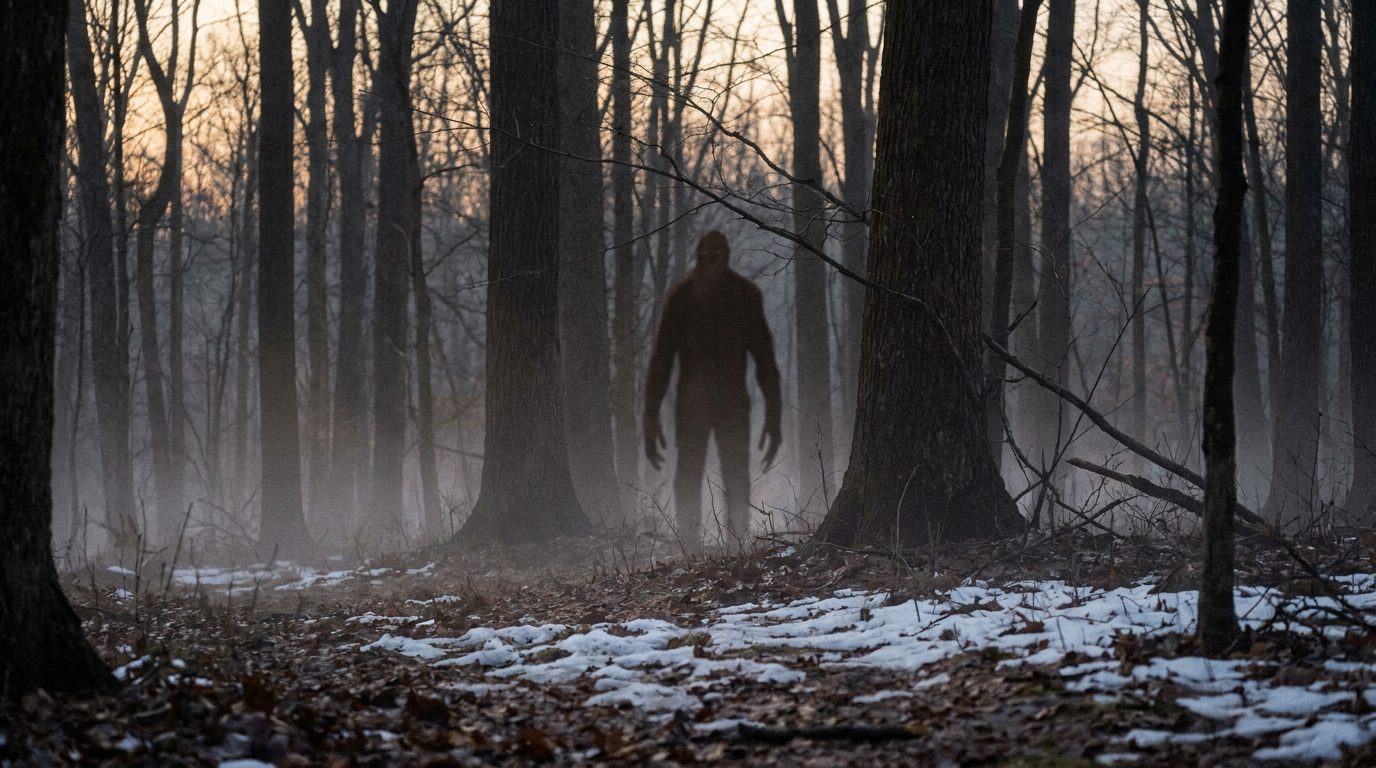

Between Friday 6 March and Tuesday 10 March 2026, six separate Bigfoot sightings were independently reported across a thirty-mile patch of woodland in Portage County, north-eastern Ohio. The reports were collected and verified by Jeremiah Byron, host of the long-running Bigfoot Society Podcast, who said in a statement that the cluster represents the most active four-day window the modern American cryptozoology community has documented since the late 1970s. The technical term for what is happening in northeast Ohio right now is a flap. And inside the Bigfoot research community, this is the word everyone has been waiting their entire careers to use.
The locations span two small Ohio townships south-east of Cleveland — Mantua and Garrettsville — both sitting along the wooded margins of the Cuyahoga River watershed. Witnesses include named local residents who have agreed to speak on the record. The descriptions are detailed. The footprints, where reported, were photographed. And the cluster is still growing — a follow-up wave of less-formal sightings has continued to be reported through April and May.
What A “Flap” Actually Means
In cryptozoology, “flap” is not a casual word. It is the technical term — borrowed from older UFO research — for multiple independent sightings of the same phenomenon, in the same geographic area, within an unusually short window of time. A single Bigfoot sighting in a given month, anywhere in the United States, is routine. Two sightings in a county over a year is unremarkable. A genuine flap requires the kind of clustering that statistically should not happen by chance.
“It’s normal for there to be Bigfoot sightings all over the United States,” Jeremiah Byron told local Ohio outlets, “but it’s not normal to have multiple sightings in a small area within a short number of days. The Bigfoot community is extremely excited because we thought we’d never live through anything like this again.”
The phrasing matters. Byron is a podcast host who has spent the past decade collecting routine sighting reports. He has interviewed witnesses across every state. He has, by any reasonable measure, become exhaustion-proof on the topic. And he is telling regional news that he did not expect to see another flap in his lifetime.
The Witnesses
Two named witnesses have given the fullest accounts. The other four reports remain partially anonymised at the witnesses’ request — a normal pattern for residents who do not want to deal with the harassment that public Bigfoot testimony tends to attract — but the named reports alone are striking.
Dylan Obney — Saturday 7 March
Local resident Dylan Obney reported observing a figure approximately eight feet tall, with long arms and dark brown hair, moving through wooded terrain on the morning of 7 March. The observation lasted long enough that Obney also reported what he described as “heavy rhythmic footsteps”, audible at distance, and a single “deep, vibrating grunt” as the figure cleared the treeline.
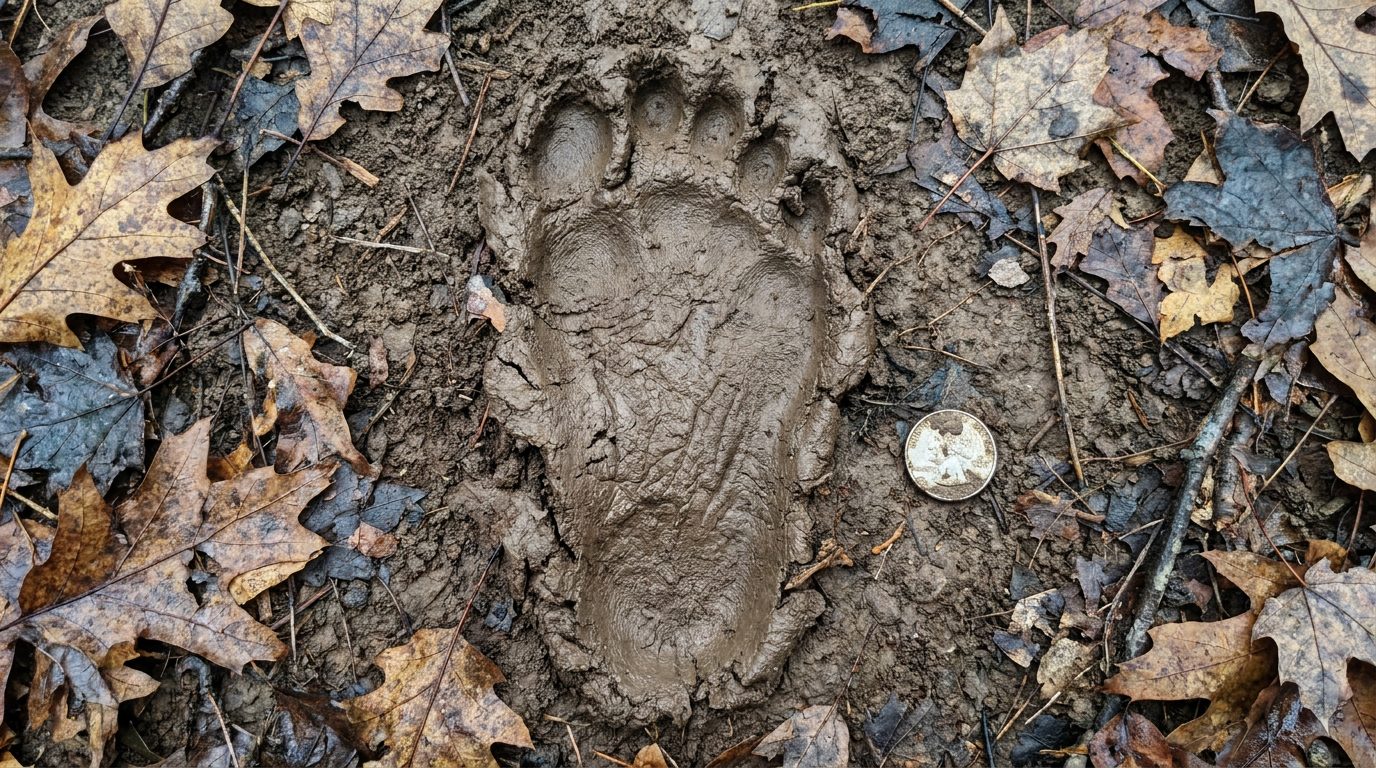
At the scene, Obney photographed oversized muddy footprints at the edge of a soft-ground clearing. The prints have been independently shared with the Bigfoot Society for documentation. They were not preserved for further forensic study — the rain returned the same afternoon — but they exist in dated, time-stamped photographs.
Jacob Taylor — Headwaters Trail
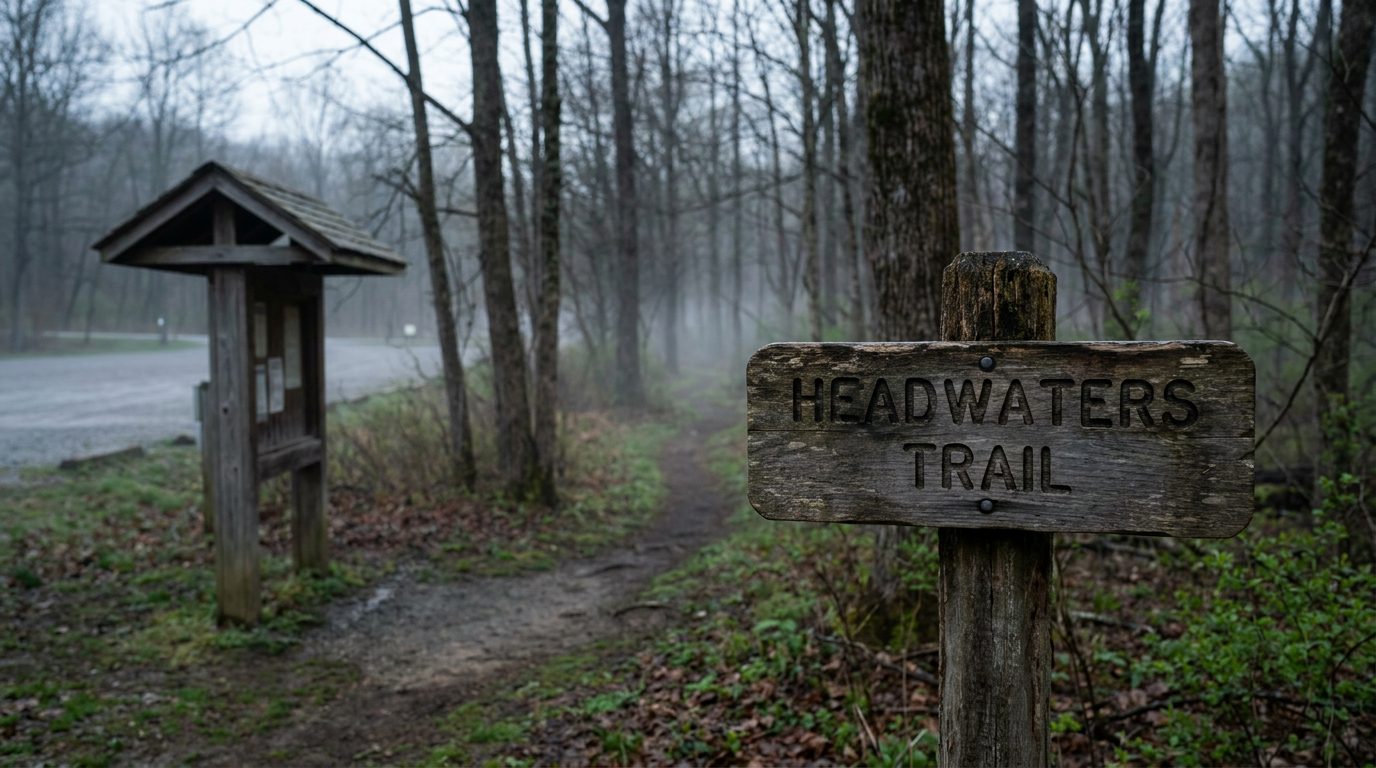
The Headwaters Trail is a heavily-used hiking corridor cutting through the wooded margins of the same Portage County watershed. Hiker Jacob Taylor reported a face-to-face encounter on the trail lasting roughly fifteen seconds. He was, by his own account, close enough to see facial detail. He has declined to elaborate further publicly. Byron has confirmed that Taylor’s full statement has been recorded for the podcast’s witness archive.
The other four
The four remaining sightings span the same four-day window and were collected by Byron from witnesses who agreed to be interviewed on condition of anonymity. According to Byron’s own summary, the descriptions vary in a way that suggests more than one individual creature is involved: heights range from six to ten feet, hair colours range from light brown to nearly black, and the directional patterns of movement do not match a single individual moving through the area.
Why Multiple Individuals Matters
Single-creature Bigfoot sightings are routine and easy to dismiss. The argument goes: it was a bear, it was a tall person in a coat, it was a misidentified deer at distance. The standard skeptical answer is always available.
Cluster sightings with multiple different physical descriptions over a four-day window are harder to fit into that template. If Byron’s read is correct — and the variance in heights and colours genuinely suggests more than one individual — then northeast Ohio is, for whatever reason, currently hosting a small group of large bipedal hairy primates that nobody has photographed at close range yet.
That is either the largest single zoological story of the decade, or six independent local residents have hallucinated the same encounter inside a four-day window, with matching enough detail to convince a veteran investigator that it is real.
Why The Cuyahoga Watershed?
This is the question that has cryptozoologists most engaged. Portage County is not new Bigfoot territory. Ohio in general has one of the densest concentrations of historical Bigfoot reports in the United States — the “Ohio Grassman” tradition reaches back to the 19th century, and the BFRO (Bigfoot Field Researchers Organisation) has been logging Ohio sightings continuously since 1995.
But the density of the March 2026 cluster is what makes this different. Six sightings in four days inside a thirty-mile radius is a rate of activity that the Ohio archives do not have a precedent for. The Cuyahoga watershed is contiguous wooded corridor — hundreds of square kilometres of forest with very few major roads cutting through it. If a population of large unrecognised primates were going to persist in continental North America, that exact terrain profile is one of the small handful of regions where the math works.
The Wider Bigfoot Record
The Ohio flap joins a continuously-active North American Bigfoot record we have covered repeatedly. There was the official Texas Department of Parks bulletin that quietly conceded evidence of Bigfoot in state forest land. There is actor Rob Lowe’s on-set sighting during a 2020 television shoot. There is the long catalogue of the most-documented sightings worldwide, the Russian super-fast Bigfoot forest footage, and the surprisingly persistent surveillance-camera capture from a US forest installation.
Each of those individually is dismissible. Together they form the same pattern the orange-orbs case formed for UAP: a phenomenon that the mainstream of the scientific community has declined to formally engage with, but which keeps generating credible-witness reports across decades, across continents, in terrain where statistical clustering should not be possible without some real underlying object.
What Happens Next
The Bigfoot Society has confirmed it is conducting an organised investigation in the Mantua–Garrettsville corridor, including planned overnight observation work, trailcam deployment, and additional witness interviews from residents who have come forward since the initial March cluster. Local outlets in Portage County have continued to publish follow-up sightings into April and May.
No photographs, video footage, or physical specimens have been formally released yet. The 30-year drought of high-quality Bigfoot photographic evidence remains unbroken. But for the first time in nearly half a century, the cryptozoology community has a single named geographic area with active ongoing reports and a coordinated investigation in progress. If a clear photograph or video of an Ohio Bigfoot is going to appear, it will appear now.
Frequently Asked Questions
When did the Ohio Bigfoot flap happen?
Six independent Bigfoot sightings were reported between Friday 6 March 2026 and Tuesday 10 March 2026, in wooded terrain near the townships of Mantua and Garrettsville in Portage County, north-eastern Ohio. Further informal sightings have continued to be reported in April and May.
Who is Jeremiah Byron?
Jeremiah Byron is the host of the Bigfoot Society Podcast, a long-running US cryptozoology programme that catalogues eyewitness sightings of Sasquatch and related large-primate cryptids. He has personally interviewed witnesses from across the United States and has described the Ohio cluster as the most significant flap the modern community has documented since the 1970s.
How tall was the figure Dylan Obney saw?
Obney’s report describes a figure approximately eight feet tall, with long arms and dark brown hair, observed on the morning of 7 March 2026. He also reported heavy rhythmic footsteps audible at distance, a single deep vibrating grunt, and oversized muddy footprints photographed at the scene.
Are there multiple Bigfoot involved?
According to Byron’s analysis of the six witness reports, the descriptions vary too widely — heights from six to ten feet, hair colours from light brown to nearly black, distinct directional movement patterns — to fit a single individual. His current working hypothesis is that the Mantua–Garrettsville cluster involves more than one individual creature operating in the same wooded corridor.
Is there any photographic evidence?
Dylan Obney has photographed oversized muddy footprints at the scene of his sighting. No formal photographic or video evidence of the creatures themselves has been released as of the latest reporting. The Bigfoot Society is conducting an active investigation with planned trailcam deployment in the affected area.
What is the Cuyahoga watershed and why does it matter?
The Cuyahoga watershed is the contiguous wooded river-corridor running through Portage County, south-east of Cleveland. It is hundreds of square kilometres of forest with relatively few major roads. It is exactly the kind of terrain that researchers have long suggested would be required to support a low-population breeding group of large, undocumented primates persisting undetected in continental North America.
Has anything like this happened before in Ohio?
Ohio has one of the highest historical densities of Bigfoot reports in the United States — the regional “Ohio Grassman” tradition dates to the 19th century, and the Bigfoot Field Researchers Organisation has logged Ohio sightings continuously since 1995. But the density of the March 2026 cluster — six in four days inside a thirty-mile radius — has no Ohio precedent in the modern record.
Discover more from Infinity Explorers
Subscribe to get the latest posts sent to your email.